

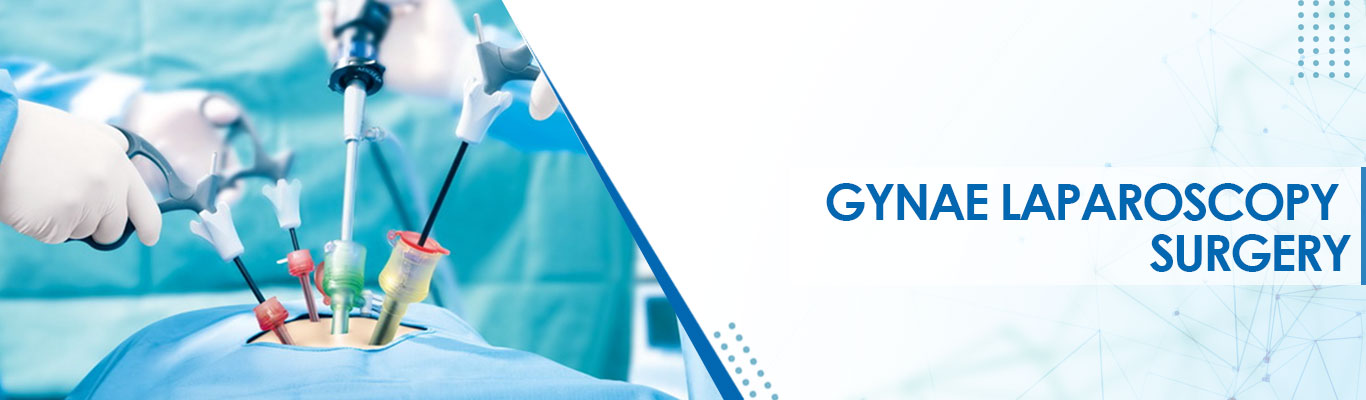
Gynae Laparoscopic Surgeons in Sector - 71, Noida
A gynaecological laparoscopy is a procedure that allows a surgeon to examine your fallopian tubes, ovaries and womb (uterus). It can be used to either to diagnose or treat a condition.
List of Gynae Laparoscopic Surgeons in Noida
 Sunil Kumar ChawlaKailash Hospital Neuro Institute.jpg.jpg)
Col (Dr.) Sunil Kumar Chawla
MBBS, MS (Obst & Gynae)
+ Years experience
Location
Filter
List of Gynae Laparoscopic Surgeons in Noida
Col (Dr.) Sunil Kumar Chawla
MBBS, MS (Obst & Gynae)
+ Years experience
Location
A gynaecological laparoscopy is a procedure that allows a surgeon to examine your fallopian tubes, ovaries and womb (uterus). It can be used to either diagnose or treat a condition.
About Gynaecological Laparoscopy
Gynaecological laparoscopy can be used to:
- Diagnose and treat endometriosis
- Diagnose and treat pelvic inflammatory disease
- Remove scar tissue (adhesions)
- Treat an ectopic pregnancy
- Remove an ovarian cyst
- Remove your womb (hysterectomy) or ovaries (oophorectomy)
- Treat fibroids (myoma)
- Remove lymph nodes for cancer of uterus, ovary or cervix.
- Management of vaginal vault prolapse; urinary bladder prolapse. Urinary incontinence.
- Vaginoplasy
About Gynaecological Hysteroscopy
This procedure is used to diagnose and treat the following:
- Infertility
- Opening the fallopian tubes
- Removing uterine fibroid
- Taking uterine biopsy
- Removing uterine septa and scar tissue
- Doing other procedures causing infertility and recurrent abortions or abortion
Your surgeon may also suggest a laparoscopy if you have pain in your abdomen because it may help to find out the cause. If you're having problems getting pregnant, you can have a laparoscopy to see if there are any problems with your ovaries, fallopian tube or womb.
If you're having a gynaecological laparoscopy to diagnose a condition, you will usually have it done as a day-case procedure. This means you have the procedure and go home the same day. If you have a gynaecological laparoscopy to treat a condition, you may need to stay in hospital overnight.
A gynaecological laparoscopy is usually done under general anaesthesia, which means you will be asleep during the procedure. You will be asked to follow fasting instructions. This means not eating or drinking, typically for about six hours beforehand. However, it's important to follow your gynaecologist's advice.
At the hospital, your nurse may do some tests such as checking your heart rate and blood pressure, and testing your urine.
Your surgeon will discuss with you what will happen before, during and after your procedure, and any pain you might have. This is your opportunity to understand what will happen, and you can help yourself by preparing questions to ask about the risks, benefits and any alternatives to the procedure. This will help you to be informed, so you can give your consent for the procedure to go ahead, which you may be asked to do by signing a consent form.
What happens during a gynaecological laparoscopy?
The procedure can take 15 minutes or more depending on what type of examination or treatment you need.
Your surgeon will make a cut in your belly button. He or she will then put a tube through the cut and pump some gas in. This expands your abdomen, separates your organs and makes it easier for your surgeon to look at your organs with the laparoscope. If you need any treatment, or if your surgeon needs to move some of your organs to get a good view, he or she will make some small cuts lower down on your abdomen. Any surgical instruments that are needed for treatment can be inserted through these cuts. Your surgeon may inject a coloured dye through your cervix (neck of your womb), into your womb and your fallopian tubes. This can show whether your fallopian tubes are blocked.
At the end of the procedure, your surgeon will carefully take the instruments out of your abdomen and allow the gas to escape through the laparoscope. He or she will close the cuts with stitches.
What to expect afterwards
You will usually be able to go when you feel ready, but will need to arrange for someone to take you home. Try to have a friend or relative stay with you for the first 24 hours after your laparoscopy. Your nurse will give you some advice about caring for your wounds, hygiene and bathing and you may be given a date for a follow-up appointment.
Your surgeon may use dissolvable stitches. The length of time your dissolvable stitches will take to disappear depends on what type of procedure you had. However, as a general guide, they should usually disappear in seven days. If you have non-dissolvable stitches you will need to have them taken out. Your surgeon will tell you when and where to have them removed.
Recovering from a gynaecological laparoscopy
If you need pain relief, you can take over-the-counter painkillers such as paracetamol or ibuprofen.
If you have a laparoscopy to diagnose a condition you will need to rest and take it easy for up to 4 days, though this will depend on the type of procedure you had. If you have treatment during the laparoscopy – for example for endometriosis or a hysterectomy – your recovery will take longer.
Follow your surgeon’s advice about contraception and when you can have sex again.
What are the risks?
As with every procedure, there are some risks associated with gynaecological laparoscopy. We have not included the chance of these happening as they are specific to you and differ for every person. Ask your surgeon to explain how these risks apply to you.
Side-effects
Side-effects are the unwanted but mostly temporary effects you may get after having the procedure. For example, you're likely to feel some pain in your abdomen and you may also have pain in your shoulders. This is caused by the gas used to inflate your abdomen; it usually improves within 48 hours.
You may have some bruising on your abdomen around the areas where the laparoscope and any surgical instruments were put in – this usually gets better.
Gynae Laparoscopic Surgeons near Gaur City
Gynae Laparoscopic Surgeons near Greater Noida West
Gynae Laparoscopic Surgeons near Jaypee Greens
Gynae Laparoscopic Surgeons near Sector-120
Gynae Laparoscopic Surgeons near Sector-122
Gynae Laparoscopic Surgeons near
Gynae Laparoscopic Surgeons near Sector-49
Gynae Laparoscopic Surgeons near Sector-50
Gynae Laparoscopic Surgeons near Sector-51
Gynae Laparoscopic Surgeons near Sector-52
Gynae Laparoscopic Surgeons near Sector-53
Gynae Laparoscopic Surgeons near Sector-54
Gynae Laparoscopic Surgeons near Sector-55
Gynae Laparoscopic Surgeons near Sector-56
Gynae Laparoscopic Surgeons near Sector-57
Gynae Laparoscopic Surgeons near Sector-58
Gynae Laparoscopic Surgeons near Sector-59
Gynae Laparoscopic Surgeons near Sector-60
Gynae Laparoscopic Surgeons near Sector-61
Gynae Laparoscopic Surgeons near Sector-62
Gynae Laparoscopic Surgeons near Sector-63
Gynae Laparoscopic Surgeons near Sector-64
Gynae Laparoscopic Surgeons near Sector-65
Gynae Laparoscopic Surgeons near Sector-66
Gynae Laparoscopic Surgeons near Sector-67
Gynae Laparoscopic Surgeons near Sector-68
Gynae Laparoscopic Surgeons near Sector-69
Gynae Laparoscopic Surgeons near Sector-70
Gynae Laparoscopic Surgeons near
Gynae Laparoscopic Surgeons near Sector-72
Gynae Laparoscopic Surgeons near Sector-73
Gynae Laparoscopic Surgeons near Sector-74
Gynae Laparoscopic Surgeons near Sector-75
Gynae Laparoscopic Surgeons near Sector-76
Top Gynae Laparoscopic Surgeons Near You
Other Specialities in Noida
Top Gynae Laparoscopic Surgeons in Other Locations
Related Blogs

FAQ'S
Gynecological laparoscopic surgery is a minimally invasive procedure performed using small incisions and a thin camera called a laparoscope to diagnose and treat conditions related to the female reproductive organs.
Laparoscopic surgery offers smaller incisions, less pain, minimal blood loss, faster recovery, shorter hospital stays, reduced risk of infection, and better cosmetic results compared to traditional open surgery.
You can book an appointment by calling Kailash Hospitals directly, using the online appointment system on their official website or Kailash Helathcare App, walk in at the reception or by calling the hospital number.
Laparoscopic surgery can treat conditions such as ovarian cysts, uterine fibroids, endometriosis, ectopic pregnancy, pelvic adhesions, abnormal uterine bleeding, and certain infertility-related issues.
Recovery time depends on the procedure performed, but most patients can resume normal activities within one to two weeks, with significantly less discomfort compared to open surgery.
40+ Specialities
Explore Our Advanced Healthcare Services Encompassing a Range of Medical Specialities & Super-Specialities.
VIEW MORE →