

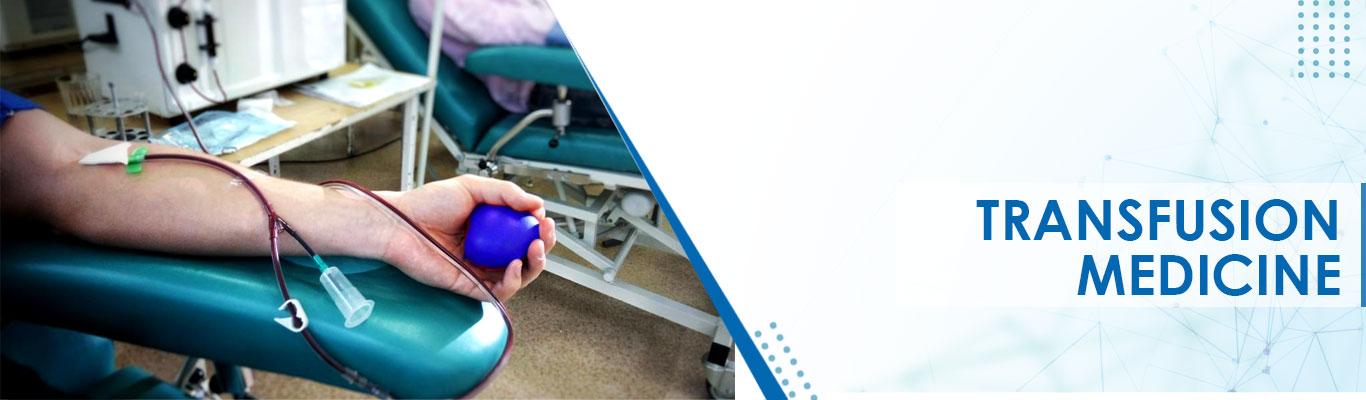
Transfusion Medicine Specialists in Noida
The hospital being a premier tertiary care hospital, patients come from all over the NCR and neighboring STATE. Blood Bank of this hospital has the state-of- art equipment and Technology. Good Manufac
List of Transfusion Medicine Specialists in Noida
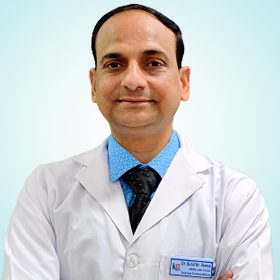
Dr. Sunil Kr. Verma
MD (Immunohematology & Blood Transfusion) PDCC (Clinical Component Therapy & Apheresis Technology)
10+ Years experience
Location
Filter
List of Transfusion Medicine Specialists
Dr. Sunil Kr. Verma
MD (Immunohematology & Blood Transfusion) PDCC (Clinical Component Therapy & Apheresis Technology)
10+ Years experience
Location
The departments of Blood Transfusion Services assure the supply of as much as possible safe and good quality of blood and its components to the patients and provide high quality services. Elimination of transfusion transmitted diseases and transfusion of safe blood. To maintain quality of blood and blood products, voluntary donors are taken. In private blood banks, where blood donation camp is not permitted by Government of India, the immediate family members are considered as replacement donors. Apart from carrying out all mandatory tests (VDRL, Malaria, HIV I&II, HbsAg and Hepatitis C virus as laid down by the Drug Controller of India for licensed Blood Banks, Kailash Hospital also conducts Hepatitis B core Antibody (Anti HBcore IgM + IgG) on every unit of blood to make the blood safer for transfusion. The department runs round the clock and blood and its components are supplied as and when requested. The annual requirement of blood in NCR and in neighboring areas is about 5,00,000 units of blood, and all blood centers collect about 3,50,000 units of blood. That means there is shortage of blood about 1,50,000 units of blood every year. The blood center of this hospital needs about 50 blood donors every day to meet the transfusion need of patients at this hospital. With increase in population and development of more advanced medical and surgical procedures, the need of blood is ever increasing. There is no substitute for blood. Only blood donors can help to maintain adequate supply of blood to save the lives of those who need it. You can help the blood center to meet the need of blood by donating blood yourself and motivating your friends / colleagues to donate blood and by becoming regular voluntary blood donor. Blood donation is simple harmless and painless procedure and consists of: Donor leukocytes present in cellular blood components are linked to wide range of transfusion adverse reactions mainly non-hemolytic reactions (FNHTR), HLA alloimmunization, platelet refractoriness, transfusion related acute lung injury (TRALI). Techniques for preparing leukocytes reduced components are: Prepared on the specific demand from fresh frozen plasma. Blood has several components, including red blood cells, platelets, plasma and stem cells. Apheresis is special type of donation in which a specific component, viz. platelets, gametocytes (white cells), plasma or stem cells are withdrawn from a donor using a special equipment called Cell Separator; the remaining components are returned into donor's blood circulation. It is very safe. Random Donor Platelet concentrate prepared from one unit of whole blood contains less number of platelets. For therapeutic dose of platelets for an adult patient 6-8 units of random donors platelets are required, while one unit of platelets prepared by apheresis is sufficient. Besides, platelets prepared by apheresis are leukocytes reduced. Thus there are less chances of transfusion transmitted-infections and platelet refractoriness with the use of platelet apheresis.Why Should You Donate Blood?
Who Can Donate Blood?
Blood Donation Procedure
Services Provided
Leukocytes-Reduced Blood Components
Leukocytes-Reduced/Depleted Red Blood Cells
Platelet Concentrates
Fresh Frozen Plasma (FFP)
Cryoprecipitate (Factor VIII)
Apheresis
What is Apheresis?
What is the Advantage of Apheresis?
The Following Procedures of Apheresis are Done
Transfusion Medicine Specialists near Gaur City
Transfusion Medicine Specialists near Greater Noida West
Transfusion Medicine Specialists near Jaypee Greens
Transfusion Medicine Specialists near Sector-1
Transfusion Medicine Specialists near Sector-10
Transfusion Medicine Specialists near Sector-11
Transfusion Medicine Specialists near Sector-12
Transfusion Medicine Specialists near Sector-120
Transfusion Medicine Specialists near Sector-122
Transfusion Medicine Specialists near Sector-14
Transfusion Medicine Specialists near Sector-15
Transfusion Medicine Specialists near Sector-16
Transfusion Medicine Specialists near Sector-17
Transfusion Medicine Specialists near Sector-18
Transfusion Medicine Specialists near Sector-19
Transfusion Medicine Specialists near Sector-2
Transfusion Medicine Specialists near Sector-20
Transfusion Medicine Specialists near Sector-21
Transfusion Medicine Specialists near Sector-22
Transfusion Medicine Specialists near Sector-23
Transfusion Medicine Specialists near Sector-24
Transfusion Medicine Specialists near Sector-25
Transfusion Medicine Specialists near Sector-26
Transfusion Medicine Specialists near Sector-27
Transfusion Medicine Specialists near Sector-28
Transfusion Medicine Specialists near Sector-29
Transfusion Medicine Specialists near Sector-3
Transfusion Medicine Specialists near Sector-30
Transfusion Medicine Specialists near Sector-31
Transfusion Medicine Specialists near Sector-32
Transfusion Medicine Specialists near Sector-33
Transfusion Medicine Specialists near Sector-34
Transfusion Medicine Specialists near Sector-35
Transfusion Medicine Specialists near Sector-36
Transfusion Medicine Specialists near Sector-37
Transfusion Medicine Specialists near Sector-38
Transfusion Medicine Specialists near Sector-39
Transfusion Medicine Specialists near Sector-4
Transfusion Medicine Specialists near Greater Noida
Transfusion Medicine Specialists near Sector-40
Transfusion Medicine Specialists near Sector-41
Transfusion Medicine Specialists near Sector-42
Transfusion Medicine Specialists near Sector-49
Transfusion Medicine Specialists near Sector-5
Transfusion Medicine Specialists near Sector-50
Transfusion Medicine Specialists near Sector-51
Transfusion Medicine Specialists near Sector-52
Transfusion Medicine Specialists near Sector-53
Transfusion Medicine Specialists near Sector-54
Transfusion Medicine Specialists near Sector-55
Transfusion Medicine Specialists near Sector-56
Transfusion Medicine Specialists near Sector-57
Transfusion Medicine Specialists near Sector-58
Transfusion Medicine Specialists near Sector-59
Transfusion Medicine Specialists near Sector-6
Transfusion Medicine Specialists near Sector-60
Transfusion Medicine Specialists near Sector-61
Transfusion Medicine Specialists near Sector-62
Transfusion Medicine Specialists near Sector-63
Transfusion Medicine Specialists near Sector-64
Transfusion Medicine Specialists near Sector-65
Transfusion Medicine Specialists near Sector-66
Transfusion Medicine Specialists near Sector-67
Transfusion Medicine Specialists near Sector-68
Transfusion Medicine Specialists near Sector-69
Transfusion Medicine Specialists near Sector-70
Transfusion Medicine Specialists near Sector-71
Transfusion Medicine Specialists near Sector-72
Transfusion Medicine Specialists near Sector-73
Transfusion Medicine Specialists near Sector-74
Transfusion Medicine Specialists near Sector-75
Transfusion Medicine Specialists near Sector-76
Transfusion Medicine Specialists near Sector-77
Transfusion Medicine Specialists near Sector-8
Transfusion Medicine Specialists near Sector-9
Top Transfusion Medicine Specialists Near You
Other Specialities Near You
Top Transfusion Medicine Specialists in Other Locations
FAQ'S
The Transfusion Medicine department provides blood collection, screening for transfusion-transmitted infections, blood group and compatibility testing, and supply of blood components such as packed red cells (PRBC), platelet concentrates, fresh frozen plasma (FFP), leukocyte-reduced blood products, and cryoprecipitate. They also conduct compatibility and antibody tests to ensure safe transfusions.
Before transfusion, blood undergoes mandatory screening for transfusion-transmitted infections such as HIV, Hepatitis B and C, syphilis, and malaria. It also includes ABO and Rh(D) blood grouping, antibody screening, antihuman globulin testing, and compatibility tests to ensure safety and reduce risk.
The Transfusion Medicine services are overseen by experienced specialists in Immunohematology and Blood Transfusion, including trained physicians who manage safe blood processing, testing, and compatibility testing as well as clinical oversight of blood products.
Yes — the Blood Bank operates round the clock, supplying safe and quality blood and blood components to patients as and when requested for emergencies and planned procedures.
The blood donation process involves registration and brief medical examination, hemoglobin testing, collection of blood using sterile equipment, and post-donation refreshments. A typical donation takes about 8–9 minutes, and donors are advised to rest after donating
Voluntary blood donation helps maintain a steady, safe, and adequate supply of blood units, which is essential to meet daily transfusion needs for surgeries, emergencies, trauma care, and chronic conditions. It also helps reduce reliance on family/replacement donors and increases overall safety.
40+ Specialities
Explore Our Advanced Healthcare Services Encompassing a Range of Medical Specialities & Super-Specialities.
VIEW MORE →