

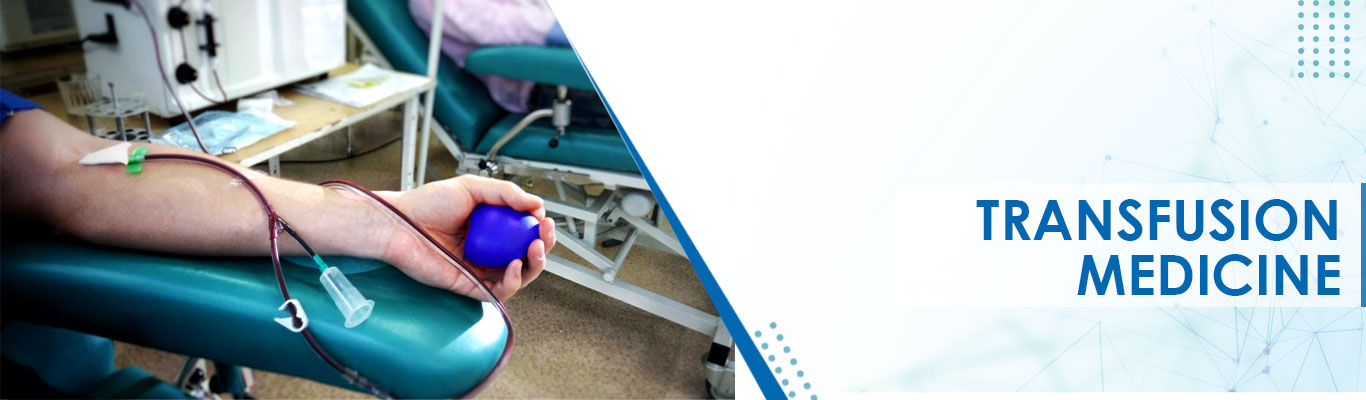
Transfusion Medicine Specialists in Khurja
The hospital being a premier tertiary care hospital, patients come from all over the NCR and neighboring STATE. Blood Bank of this hospital has the state-of- art equipment and Technology.
List of Transfusion Medicine Specialists in Khurja
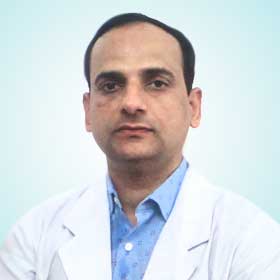
Dr. Sunil Verma
MD (Immunohematology & Blood Transfusion) PDCC (Clinical Component Therapy & Apheresis Technology)
10+ Years experience
Location
Filter
List of Transfusion Medicine Specialists
Dr. Sunil Verma
MD (Immunohematology & Blood Transfusion) PDCC (Clinical Component Therapy & Apheresis Technology)
10+ Years experience
Location
The hospital being a premier tertiary care hospital, patients come from all over the NCR and neighboring states. Blood Bank of this hospital has state-of-the-art equipment and technology. Good Manufacturing Practices (GMP) is followed at all phases of donor selection, screening and processing of blood and serological processes. Standards in the techniques and quality control are meticulously maintained as laid down in the Drugs and Cosmetic Act, the Regulatory Authority, Drugs Controller General (India), Ministry of Health & Family Welfare, Government of India, National Accreditation Board for Hospitals and Health Care Providers and WHO.
The Department of Blood Transfusion Services assures the supply of safe and good quality blood and its components to patients and provides high-quality services.
Elimination of transfusion-transmitted diseases and transfusion of safe blood are key priorities. To maintain the quality of blood and blood products, voluntary donors are taken. In private blood banks, where blood donation camps are not permitted by the Government of India, immediate family members are considered as replacement donors.
Apart from carrying out all mandatory tests (VDRL, Malaria, HIV I & II, HBsAg and Hepatitis C virus) as laid down by the Drug Controller of India for licensed Blood Banks, Kailash Hospital also conducts Hepatitis B core Antibody (Anti-HBcore IgM + IgG) on every unit of blood to make the blood safer for transfusion.
The department runs round the clock and blood and its components are supplied as and when requested.
Why Should You Donate Blood?
The annual requirement of blood in NCR and neighboring areas is about 5,00,000 units of blood, and all blood centers collect about 3,50,000 units of blood. That means there is a shortage of about 1,50,000 units of blood every year. The blood center of this hospital needs about 50 blood donors every day to meet the transfusion needs of patients at this hospital. With an increase in population and the development of more advanced medical and surgical procedures, the need for blood is ever increasing. There is no substitute for blood. Only blood donors can help maintain an adequate supply of blood to save the lives of those who need it.
You can help the blood center meet the need for blood by donating blood yourself, motivating your friends and colleagues to donate blood, and becoming a regular voluntary blood donor.
Who Can Donate Blood?
- A blood donor must be in good health.
- Age between 18 to 60 years.
- Weight about 50 kg or more.
- Hemoglobin level at least 12.5 g/dl.
- It is safe to donate blood every three months.
- Persons with high-risk behavior for having AIDS and those who have had jaundice (Hepatitis B or C) should exclude themselves from blood donation.
Blood Donation Procedure
Blood donation is a simple, harmless and painless procedure and consists of:
- Registration.
- Medical examination; blood is taken if the person is medically fit.
- Simple laboratory tests - Hemoglobin estimation is done before donation.
- Blood is withdrawn with a sterile and disposable needle in bags. There is no chance of getting any infection by donating blood.
- Actual blood donation takes 8-9 minutes.
- Refreshment or some drink is given after donation and the donor is advised to rest for 8-10 minutes.
Services Provided
-
Screening of blood for transfusion-transmitted diseases:
- p24 HIV and anti-HIV 1 & 2 by ELISA by fourth generation test
- HBV (HBsAg) by ELISA
- HCV (anti-HCV) by ELISA
- Syphilis
- Malaria
- Red Cell serology - tests for ABO, Rh(D) group & Du (weak D) in Rh-negative donor.
- Antibody screening for complete and incomplete antibodies.
- Antihuman globulin test - manual and Gel technology.
- Titer of complete antibodies in saline.
- Titer of incomplete antibodies by antihuman globulin test (I.D. Gel technique).
- Compatibility test is done for both complete and incomplete antibodies.
- Compatibility test for incomplete antibodies is done by Coombs' test (I.D. Gel Technology).
- Adverse reactions of blood transfusion are investigated.
- Blood Components Available:
- Leukocytes-reduced Packed Red Blood Cell (LR-PRBC).
- Packed Red Blood Cell (PRBC).
- Platelet concentrate (RDP & SDP).
- Fresh Frozen Plasma (FFP).
- Cryoprecipitate.
Leukocytes-Reduced Blood Components
Donor leukocytes present in cellular blood components are linked to a wide range of transfusion adverse reactions, mainly non-hemolytic reactions (FNHTR), HLA alloimmunization, platelet refractoriness and transfusion-related acute lung injury (TRALI).
Techniques for preparing leukocytes-reduced components are:
- Semi-automated method (using quadruple bags).
- Pre-storage leukocytes-reduced blood components are prepared in blood bags with inline integral leukocytes-depletion filter.
- Apheresis.
Leukocytes-Reduced / Depleted Red Blood Cells
- Red blood cells leukocytes reduced to log 1 (85-90%), prepared by removing Buffy coat and stored in additive solution Adsol for 42 days.
- Pre-storage red blood cells leukocytes-depleted to log 3-4 (99.9-99.99%), prepared by removing Buffy coat and filtering red blood cells through an inline leukocytes depletion filter and stored in SAG-M additive solution for 42 days.
Platelet Concentrates
- Preparation of random donor platelets from Buffy coat - platelet yield is 6-7 × 10¹⁰ and leukocytes reduced to Log 2 (2 × 10⁷, e.g. 95%) in one unit of platelets.
- Platelet Apheresis - platelet yield is 5-7 × 10¹¹, leukocytes reduced to log 3 (99.9%), plasma 200-300 ml.
Fresh Frozen Plasma (FFP)
- 180-200 ml in one unit, leukocytes-reduced.
- Can be kept in frozen state (FFP) at -30°C to -40°C for 1 year.
Cryoprecipitate (Factor VIII)
Prepared on specific demand from fresh frozen plasma.
Apheresis
What Is Apheresis?
Blood has several components, including red blood cells, platelets, plasma and stem cells. Apheresis is a special type of donation in which a specific component, viz. platelets, gametocytes (white cells), plasma or stem cells, is withdrawn from a donor using special equipment called a Cell Separator. The remaining components are returned into the donor's blood circulation. It is very safe.
What Is the Advantage of Apheresis?
Random Donor Platelet concentrate prepared from one unit of whole blood contains fewer platelets. For a therapeutic dose of platelets for an adult patient, 6-8 units of random donor platelets are required, while one unit of platelets prepared by apheresis is sufficient. Besides, platelets prepared by apheresis are leukocytes-reduced. Thus, there are fewer chances of transfusion-transmitted infections and platelet refractoriness with the use of platelet apheresis.
The following procedures of Apheresis are done:
- Platelet Apheresis (SDP).
- Granulocytes Apheresis.
- Therapeutic plasma exchange.
Transfusion Medicine Specialists near Achaja Khurd
Transfusion Medicine Specialists near Arnia
Transfusion Medicine Specialists near Arnia Khurd
Transfusion Medicine Specialists near Balarau
Transfusion Medicine Specialists near Bichola
Transfusion Medicine Specialists near Danwar
Transfusion Medicine Specialists near Farana
Transfusion Medicine Specialists near Gawan
Transfusion Medicine Specialists near Hasangarh
Transfusion Medicine Specialists near Kamalpur
Transfusion Medicine Specialists near Keoli Kalan
Transfusion Medicine Specialists near Keoli Khurd
Transfusion Medicine Specialists near Khandupura
Transfusion Medicine Specialists near Khera
Transfusion Medicine Specialists near Khurja Rural
Transfusion Medicine Specialists near Lakhawti
Transfusion Medicine Specialists near Mirzapur
Transfusion Medicine Specialists near Mozpur
Transfusion Medicine Specialists near Naysar
Transfusion Medicine Specialists near Nizampur
Transfusion Medicine Specialists near Pahasu
Transfusion Medicine Specialists near Rohinda
Top Transfusion Medicine Specialists Near You
Other Specialities Near You
Top Transfusion Medicine Specialists in Other Locations
FAQ'S
A transfusion medicine specialist supports treatment of conditions requiring blood or blood components such as anemia, bleeding disorders, trauma cases, surgeries, cancer care, and critical illnesses needing transfusion support.
Common signs include severe anemia, excessive bleeding, trauma, major surgery requirements, low platelet counts, or medical conditions requiring blood component therapy.
Prepare by carrying previous medical reports, blood group records, medication details, and informing the doctor about allergies or past transfusion reactions for safe management.
Transfusion medicine services include blood collection, component preparation, cross-matching, screening for transfusion-transmitted infections, safe transfusion practices, and round-the-clock blood supply support.
You should consult a transfusion medicine specialist when advised blood transfusion, during planned surgeries, cancer treatment, emergencies, or for specialized blood component therapy.
The frequency depends on your condition and treatment needs. Follow-ups may be required for repeated transfusions or ongoing medical care.
40+ Specialities
Explore Our Advanced Healthcare Services Encompassing a Range of Medical Specialities & Super-Specialities.
VIEW MORE →