


Testicular Torsion in a Patient with Duchenne Muscular Dystrophy Successfully Managed at Kailash Hospital
Managing surgical emergencies in patients with underlying neuromuscular disorders can be highly challenging and requires a multidisciplinary approach. A rare and critical case was successfully handled at Kailash Hospital, where a young patient with Duchenne Muscular Dystrophy (DMD) presented with an acute urological emergency requiring immediate intervention. This case highlights the importance of timely diagnosis, advanced imaging, and expert surgical care in saving lives and preventing complications.
What makes this case particularly rare and special is that testicular torsion is almost never reported in patients with DMD, this is among the first documented cases globally. The coexistence of a neuromuscular disorder with a time-sensitive surgical emergency posed unique diagnostic and treatment challenges.
Presentation of Symptoms (if any)
The patient, an adolescent male, presented with:
- Sudden onset of severe scrotal pain
- Localized discomfort in the right side
- Difficulty in clearly expressing or localizing pain due to underlying neuromuscular condition
Clinical examination was challenging because of limited mobility, generalized muscle weakness, and atypical pain presentation, which are commonly associated with Duchenne Muscular Dystrophy. Despite these limitations, tenderness and mild swelling in the affected area were noted.
Diagnosis
Given the urgency and diagnostic uncertainty, an immediate Colour Doppler Ultrasound was performed.
- The imaging revealed complete absence of blood flow in the right testis, confirming acute testicular torsion
- The left testis showed normal vascularity
As noted in the case report, early imaging played a crucial role in confirming the diagnosis, especially when physical examination findings were inconclusive.
Condition Overview
Testicular torsion is a time-sensitive surgical emergency caused by twisting of the spermatic cord, which cuts off blood supply to the testis. If not treated within a few hours, it can lead to irreversible damage and loss of the testicle.
In patients with Duchenne Muscular Dystrophy, diagnosis becomes even more difficult due to:
- Limited mobility
- Altered pain perception
- Communication challenges
- Associated cardiac and respiratory complications
These factors can delay recognition and increase the risk of severe outcomes, making early suspicion and rapid intervention critical.
Treatment Plan
Under expert medical supervision, the patient was immediately prepared for emergency surgery. The treatment involved:
1. Emergency Surgical Exploration
- Intraoperative findings revealed a 720° torsion of the spermatic cord
- The affected testis was found to be non-viable due to prolonged ischemia
2. Surgical Intervention
- Orchiectomy (removal of the affected testis) was performed
- Prophylactic orchidopexy (fixation) of the opposite testis was done to prevent future torsion
3. Specialized Anaesthetic Management
Given the patient’s DMD condition:
- Total Intravenous Anaesthesia (TIVA) was used
- High-risk drugs like succinylcholine and inhalational agents were strictly avoided
- Continuous cardiac and respiratory monitoring was maintained
4. Post-Operative Care
- The patient was shifted to a high-dependency unit
- Close monitoring of cardiac and respiratory status
- Supportive care and physiotherapy
Outcome and Follow-Up
Following surgery, the patient showed stable recovery without complications.
- No perioperative complications were observed
- Cardiorespiratory status remained stable
- The patient was discharged within a few days in improved condition
The successful outcome highlights the effectiveness of timely surgical intervention combined with careful perioperative planning.
Conclusion
This rare case emphasizes that testicular torsion can occur even in patients with complex neuromuscular disorders like Duchenne Muscular Dystrophy, where diagnosis may not be straightforward.
It reinforces several key clinical takeaways:
- Always maintain a high index of suspicion in acute scrotal pain
- Use early imaging when clinical examination is inconclusive
- Ensure rapid surgical intervention to prevent irreversible damage
- Adopt a multidisciplinary approach, especially in high-risk patients
At Kailash Hospital, advanced diagnostics, expert surgical care, and coordinated teamwork played a crucial role in successfully managing this rare and life-threatening condition.
Media Citation
Verified by :
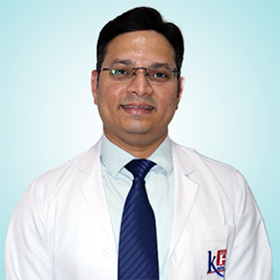
Dr. Rahul Tiwari
Dr. Rahul Tiwari is a Consultant Uro Surgeon at Kailash Hospital & Neuro Institute, specializing in Urology. With expertise in laser treatments for kidney stones, prostate management (BPH), and uro-oncology, he also treats male sexual problems, infertility, and urinary tract infections. Dr. Tiwari is skilled in reconstructive urology and managing conditions like urinary incontinence and testicular disorders.