


Successful Surgical Management of Locally Advanced Buccal Mucosa Cancer with Complex Reconstruction
Cancers of the oral cavity are some of the frequently occurring cancers in India, and smoking and chewing of tobacco are considered the primary causes for this condition. Carcinoma of the buccal mucosa is cancer that arises from the inner side of the mouth lining. The problem with such a disease occurring is the involvement of surrounding structures in the cancerous condition.
Patient Presentation
An elderly man, aged 60 years, who was a chronic smoker, was observed with a large ulcerative-proliferative mass located on the left side of his buccal mucosa and cheeks. The patient complained of an enlarging mass, which caused him to be apprehensive about his oral functions.
On clinical observation, the patient had an extensive lesion of the left side of his cheek and mouth, suggestive of oral cancer.
Diagnosis
The biopsy was done using punch biopsy technique, and the pathology reports came positive for Squamous Cell Carcinoma (SCC) of the left buccal mucosa.
Contrast-enhanced CT scan of the neck showed a large mass that was heterogeneous and extending from the gingival buccal sulcus region and running backwards to pterygoid plates and upwards towards the maxillary sinus. The comprehensive staging revealed no signs of metastasis.
Thus, the case was diagnosed with locally advanced buccal mucosa carcinoma but not with metastatic disease.
Treatment Planning and Surgical Management
Following evaluation and optimal management for the surgery, the patient underwent definitive surgery by Dr. Manish Sahni and Dr. Vinod Tiku.
In view of the extensive local involvement of the lesion, a very complicated surgical approach was planned and carried out. These surgical procedures entailed:
- Left Commando Surgery
- Partial Maxillectomy
- Surgery involving clearing the high infratemporal fossa
- Extensive excision of the tumor with proper margins
- Defect reconstruction after excision using a Bipaddle PMMC (pectoralis major myocutaneous flap)
- Use of Forehead Flap for defect reconstruction owing to extensive soft tissue defect
With the use of multiple pedicle flaps, the post-excision defect was reconstructed effectively.
Postoperative Recovery
After the surgical procedure, the patient was carefully observed in the Surgical Intensive Care Unit (SICU) for the initial 48 hours.
Significant highlights in the patient’s recovery process include:
- ICU observation for 2 days
- Commencement of Ryle’s tube feeding on POD 2
- Necrosis-free, viable flaps
- Smooth recovery process
- Mobilization of the patient
- Discharge on POD 5
In general, the patient made great strides after the procedure, with all the reconstructive flaps doing well throughout their recovery process.
Histopathological Findings
Results of final pathological analysis revealed that:
- Squamous cell carcinoma
- Invasion of maxillary bone
- Metastasis in 5 out of 10 lymph nodes
- Extranodal Extension (ENE)
The above findings indicated that the nature of the disease was aggressive and further proved the need for complete surgical treatment.
Outcome and Clinical Significance
Such is a good example that illustrates how well a locally advanced cancer affecting multiple adjacent tissues can be managed. Even though the condition is advanced, surgical removal of the affected area in addition to advanced reconstruction techniques enabled the patient to have an excellent postoperative result.
Moreover, this particular example shows how helpful using multiple pedicle flaps is in addressing large composite defects in the mouth and face region.
Conclusion
The management of locally advanced buccal mucosa cancers is fraught with many surgical and reconstructive difficulties. However, with meticulous preoperative planning, surgical skill and innovative techniques of reconstruction, very good results may be obtained. The success story of this case highlights the significance of a team effort in dealing with locally advanced oral malignancies.
Verified by :
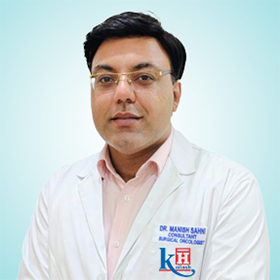
Dr. Manish Sahni
Dr. Manish Sahni is a Consultant Surgical Oncologist at Kailash Hospital, Noida, with expertise in advanced cancer surgeries. He holds MBBS, DNB (General Surgery), and MCh in Surgical Oncology qualifications and specializes in the treatment of head and neck cancers, thoracic oncology (VATS), breast cancer, gastrointestinal and colorectal cancers, hepatobiliary oncology, and gynecological malignancies including HIPEC. He also has experience in managing soft tissue sarcomas and bone tumors and is skilled in laparoscopic and robotic cancer surgeries, offering precise, minimally invasive, and patient-focused oncological care.