

Maxillofacial Surgeons in Greater Noida
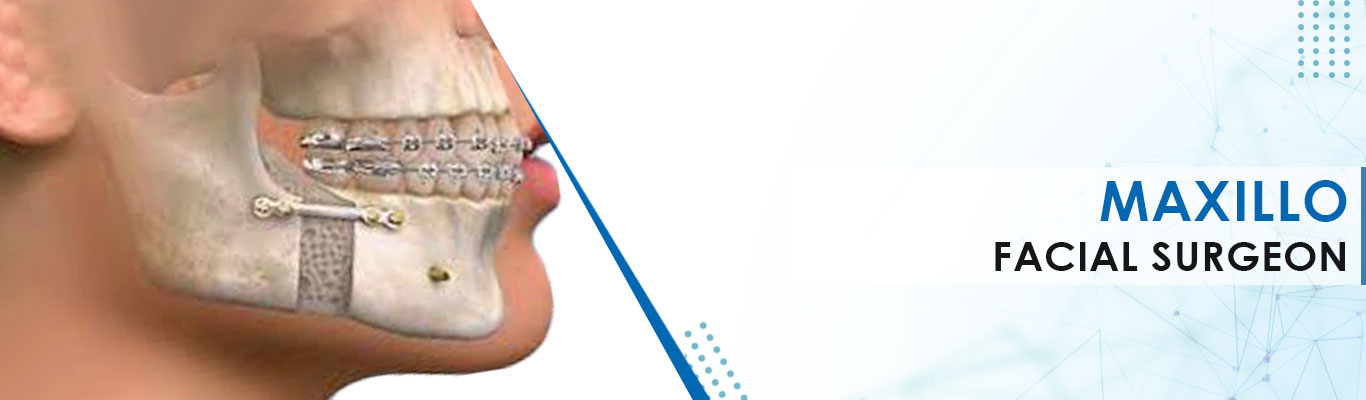
Oral & Maxillofacial Surgery focuses on surgery for diseases of the mouth, jaw & face. Maxillofacial surgeon is specialized in surgery of the facial region.
List of Maxillofacial Surgeons in Greater Noida
Dr. Anshul Singhal
M.D.S. Fellowship (Dept. of Craniofacial Surgery)
17+ Years experience
Location
Filter
List of Maxillofacial Surgeons
Dr. Anshul Singhal
M.D.S. Fellowship (Dept. of Craniofacial Surgery)
17+ Years experience
Location
Oral & Maxillofacial Surgery focuses on surgery for diseases of the mouth, jaw & face. Maxillofacial surgeon is specialized in surgery of the facial region. They are specialists in diagnosis & treatment of a broad range of disorders affecting the facial complex and skeleton, including the jaws and oral cavity (eg. impacted teeth, dental implants), jaw and congenital facial disproportion, facial trauma, oral cancer, salivary gland disease, joint disorders, cysts & tumors of the jaws).
Maxillofacial surgeons require skills in dentistry, general medicine & surgery. Oral & maxillofacial surgery is widely recognized as one of the specialties of dentistry.
These maxilla surgeons can a solid foundation for cosmetic & restorative dental work, including placement of dental implants, the system of tooth replacement preferred by many patients. Depending on the condition, bone grafting procedures of the jaw may be required for proper placement of jaw implants. When dentures are chosen in tooth replacement method, oral surgeons can reshape alveolar (jaw) bone, to ensure a comfortable fit in the mouth.
A range of maxillofacial surgical operations are performed on an outpatient basis under local anaesthesia or conscious sedation includes:
- Pre-implant surgery placement of dental/facial implants
- Removal of impacted teeth
- Intra-oral and facial soft tissue surgeries
- Cosmetic facial surgery
- Cranio-maxillofacial trauma
- Craniofacial surgery/pediatric maxillofacial surgery/cleft surgery
Maxillofacial surgeons often work in other medical specialities as ENT surgeons, clinical oncologists, plastic surgeons, restorative dentists, orthodontists, radiologists and neurosurgeons.
Maxillofacial Surgeons near Awho Iii
Maxillofacial Surgeons near Bhanauta
Maxillofacial Surgeons near Bodaki
Maxillofacial Surgeons near Devla
Maxillofacial Surgeons near Dhoom Manikpur
Maxillofacial Surgeons near Ecotech 12
Maxillofacial Surgeons near Ecotech 13
Maxillofacial Surgeons near Ecotech 14
Maxillofacial Surgeons near Ecotech 15
Maxillofacial Surgeons near Ecotech 16 A
Maxillofacial Surgeons near Ecotech I
Maxillofacial Surgeons near Ecotech I Extn I
Maxillofacial Surgeons near Ecotech Ii
Maxillofacial Surgeons near Ecotech Iii
Maxillofacial Surgeons near Ecotech Iii (Uk)
Maxillofacial Surgeons near Ecotech Ix
Maxillofacial Surgeons near Ecotech Vi
Maxillofacial Surgeons near Ecotech Vii
Maxillofacial Surgeons near Ecotech Viii
Maxillofacial Surgeons near Ecotech X
Maxillofacial Surgeons near Ecotech Xi
Maxillofacial Surgeons near Ecotech Xi A
Maxillofacial Surgeons near Girdharpur
Maxillofacial Surgeons near Gulistanpur
Maxillofacial Surgeons near Kasna
Maxillofacial Surgeons near Knowledge Park-1
Maxillofacial Surgeons near Knowledge Park-2
Maxillofacial Surgeons near Knowledge Park-3
Maxillofacial Surgeons near Knowledge Park-4
Maxillofacial Surgeons near Knowledge Park-5
Maxillofacial Surgeons near Kulesara
Maxillofacial Surgeons near Lakhnawali
Maxillofacial Surgeons near Lambda I
Maxillofacial Surgeons near Lambda Ii
Maxillofacial Surgeons near Omicron I
Maxillofacial Surgeons near Omicron I A
Maxillofacial Surgeons near Omicron Ii
Maxillofacial Surgeons near Omicron Iii
Maxillofacial Surgeons near Pari Chowk
Maxillofacial Surgeons near Sector Alpha Ii
Maxillofacial Surgeons near Sector Beta I
Maxillofacial Surgeons near Sector Beta Ii
Maxillofacial Surgeons near Sector Chi Ii
Maxillofacial Surgeons near Sector Chi Iii
Maxillofacial Surgeons near Sector Chi Iv
Maxillofacial Surgeons near Sector Chi Iv
Maxillofacial Surgeons near Sector Chi V
Maxillofacial Surgeons near Sector Chi-Phi
Maxillofacial Surgeons near Sector Delta I
Maxillofacial Surgeons near Sector Delta Ii
Maxillofacial Surgeons near Sector Delta Iii
Maxillofacial Surgeons near Sector Eta I
Maxillofacial Surgeons near Sector Eta Ii
Maxillofacial Surgeons near Sector Gamma I
Maxillofacial Surgeons near Sector Gamma Ii
Maxillofacial Surgeons near Sector Iota I
Maxillofacial Surgeons near Sector Iota Ii
Maxillofacial Surgeons near Sector Kappa I
Maxillofacial Surgeons near Sector Kappa Ii
Maxillofacial Surgeons near Sector Mu
Maxillofacial Surgeons near Sector Mu I
Maxillofacial Surgeons near Sector Mu Ii
Maxillofacial Surgeons near Sector Omega I
Maxillofacial Surgeons near Sector Omega Ii
Maxillofacial Surgeons near Sector Phi I
Maxillofacial Surgeons near Sector Phi Ii
Maxillofacial Surgeons near Sector Phi Iii
Maxillofacial Surgeons near Sector Phi Iv
Maxillofacial Surgeons near Sector Pi I & Ii
Maxillofacial Surgeons near Sector Psi I
Maxillofacial Surgeons near Sector Psi Ii
Maxillofacial Surgeons near Sector Rho I
Maxillofacial Surgeons near Sector Rho Ii
Maxillofacial Surgeons near Sector Theta
Maxillofacial Surgeons near Sector Xu I
Maxillofacial Surgeons near Sector Xu Ii
Maxillofacial Surgeons near Sector Xu Iii
Maxillofacial Surgeons near Sector Zeta I
Maxillofacial Surgeons near Sector Zeta Ii
Maxillofacial Surgeons near Sector-1
Maxillofacial Surgeons near Sector-10
Maxillofacial Surgeons near Sector-11
Maxillofacial Surgeons near Sector-12
Maxillofacial Surgeons near Sector-12 A
Maxillofacial Surgeons near Sector-16
Maxillofacial Surgeons near Sector-16B
Maxillofacial Surgeons near Sector-16C
Maxillofacial Surgeons near Sector-2
Top Maxillofacial Surgeons Near You
Other Specialities Near You
Top Maxillofacial Surgeons in Other Locations
FAQ'S
A Maxillofacial Surgeon diagnoses and treats disorders affecting the mouth, jaw, face, and neck, including impacted teeth, jaw deformities, facial trauma, oral cancer, cysts and tumors of the jaws, TMJ disorders, and congenital facial abnormalities.
Common signs include facial injuries, jaw pain or stiffness, difficulty chewing or opening the mouth, swelling in the jaw area, impacted teeth, facial deformities, or persistent oral lesions.
Prepare by bringing dental and medical history, imaging reports (X-ray/CT), medication list, details of symptoms, and any previous treatment records to help with accurate evaluation and planning.
Maxillofacial surgery services include removal of impacted teeth, dental and facial implant procedures, intra-oral and facial soft tissue surgeries, trauma reconstruction, cleft and craniofacial surgery, and jaw correction procedures, often performed under local anesthesia or sedation.
You should see a Maxillofacial Surgeon if you have facial trauma, jaw alignment issues, oral growths, persistent jaw dysfunction, or are referred for surgical management of dental or facial conditions.
The frequency of visits depends on your condition, treatment plan, and recovery progress. Follow-ups are typically scheduled after procedures to monitor healing and outcomes.
40+ Specialities
Explore Our Advanced Healthcare Services Encompassing a Range of Medical Specialities & Super-Specialities.
VIEW MORE →