Mouth Cancer Caused by Smoking & Tobacco: Symptoms & Prevention
Verified By
Dr. Manish Sahni
,
MBBS, DNB(General Surgery), MCh (Surgical Oncology), Consultant Surgical Oncologist, Kailash Hospital
| Published: 11-Apr-2026
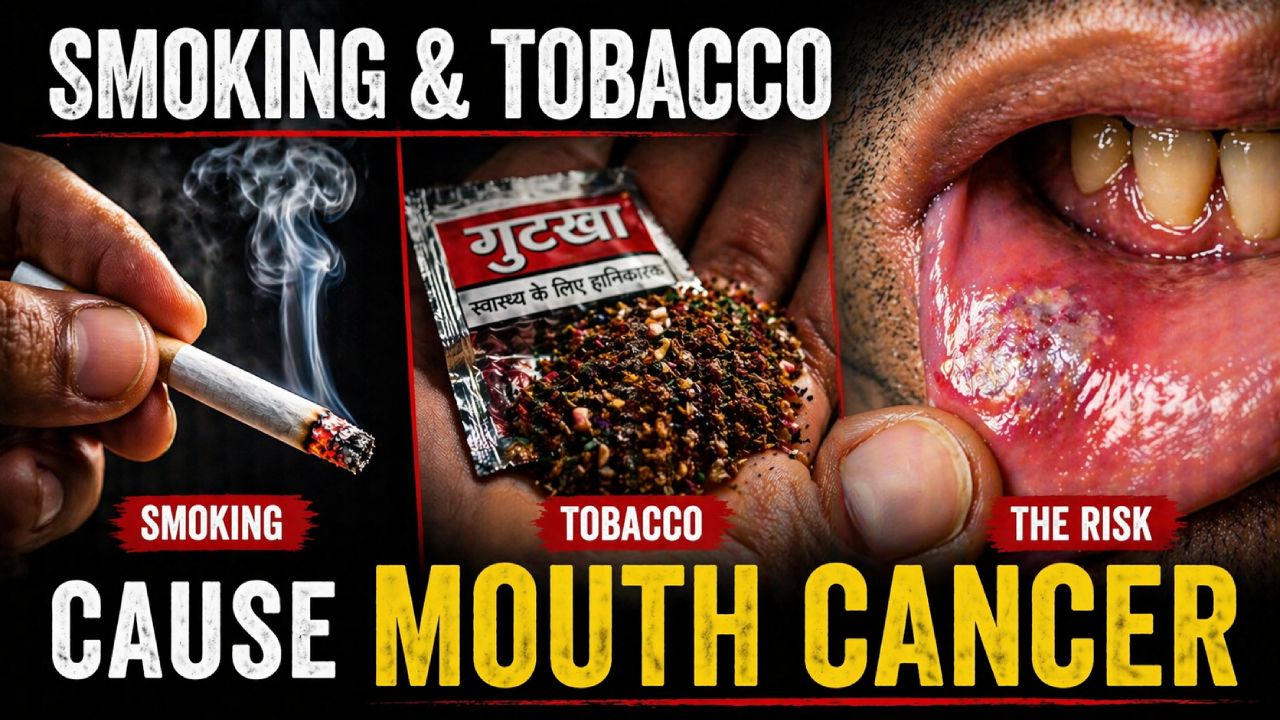
Smoking is often associated with lung disease, but one of its most dangerous and overlooked consequences is mouth cancer caused by smoking. What begins as a habit can slowly damage the delicate tissues inside your mouth, leading to life-threatening conditions.
Dr. Manish Sahni, Consultant Surgical Oncologist at Kailash Hospital, Noida, examines a patient's oral cavity with a focused, somber expression. "The mouth should not burn. When you smoke a cigarette or chew tobacco, you are not just indulging a habit; you are subjecting the delicate cells of your lips, tongue, cheeks, and gums to a cocktail of over 70 known carcinogens. This is not a risk for 'someday.' For millions of Indians, the damage is happening right now.
Understanding mouth cancer caused by smoking is not about fear it's about facts. And the facts are clear: tobacco use is the single most preventable cause of this devastating disease." According to experts at Kailash Hospital, Noida, including Dr. Manish Sahni, awareness and early detection are the most powerful tools in preventing severe outcomes.
Table of Content
Mouth cancer is any type of cancer that starts in the lip, tongue, gum, mouth floor, buccal mucosa (lining inside the cheeks), and hard palate. It usually affects squamous cell carcinomas that arise from the squamous cells of the mouth.
India has one third of oral cancer cases in the world. Oral cancer accounts for around 30% of all cancers in India. In general, more men suffer and die from oral cancer than women
"The tragedy is that this cancer is almost entirely preventable," states Dr. Manish Sahni. "Yet, we see young men and women in their 30s and 40s with advanced tumors. The social normalization of tobacco use, from gutka and paan masala to cigarettes and khaini, has created a silent epidemic. At Kailash Hospital, Noida, we treat these patients daily and we also work tirelessly to prevent them."
Also read: How to Prevent Cancer: 5 Life-Saving Habits (40% of Cases Are Preventable)
The pathogenesis of tobacco-related mouth cancer is scientifically well understood. Tobacco, whether inhaled (smoking) or not (smokeless), is a cocktail of harmful chemicals.
Stage One: Direct Contact & Chemical Absorption
The harmful effects of tobacco and its by-products occur when they come into direct contact with the lining of the mouth. With smokeless tobacco products, the product is kept in close contact with the mucosal lining of the mouth for long durations, resulting in sustained chemical absorption.
Stage Two: Genetic Alterations
Carcinogenic substances such as nitrosamines, polycyclic aromatic hydrocarbons (PAHs), and formaldehyde cause mutations in oncogenes and tumor suppressors (e.g., p53) present in the DNA of the mouth's lining.
Stage Three: Field Carcinogenesis
Since tobacco comes into contact with a broad surface area of the mouth, extensive genetic damage occurs across an entire field. This is why people end up having several independent cancers in their mouth or recurrent tumors.
Stage Four: Pre-Cancerous Lesions
DNA mutations result in the appearance of visible lesions in the mouth's lining:
- Leukoplakia: White spots that cannot be removed
- Erythroplakia: Red patches (high risk for developing cancer)
- Oral Submucous Fibrosis (OSMF): Increasing stiffness of the mouth with difficulty opening
Step 5: Cancerous Change
After years of repeated exposure, genetic changes result in cancer that will then grow and spread into adjacent tissues until ultimately reaching the lymph nodes in the neck and even other organs.
"'This is dose and time dependent,' says Dr. Sahni. 'The more one uses tobacco and the longer they do so, the greater their risk. There is no safe amount; even minimal consumption results in detectable DNA damage. It is a disease that happens over time, with each instance of its use increasing your risk.'"
Mouth cancer from tobacco usage is one such condition.
Early-stage oral cancer often has no symptoms. This is why regular self-examination and professional screening are critical. When symptoms do appear, they may include:
Early Warning Signs (Don't Ignore):
- Non-healing sore or ulcer: A sore on the lip, tongue, or inside the cheek that does not heal within 2-3 weeks
- White or red patch: A persistent white (leukoplakia) or red (erythroplakia) patch anywhere in the mouth
- Lump or thickening: A rough spot, crust, or small lump on the lip or inside the mouth
- Numbness or pain: Unexplained pain, tenderness, or numbness in any area of the mouth, face, or neck
Progressive Symptoms (As Cancer Grows):
- Difficulty chewing or swallowing (dysphagia): Food may get stuck, or swallowing may become painful
- Difficulty speaking or moving the tongue or jaw
- Loose teeth or ill-fitting dentures (not explained by other dental issues)
- A lump in the neck: Enlarged lymph nodes indicating possible spread
- Ear pain (referred pain from oral tumor)
- Unexplained weight loss
- Bleeding from the mouth not caused by injury
Also read: How to take care of Teeth with Cavities?
Symptoms of mouth cancer due to tobacco are often preceded by visible precancerous changes. Any tobacco user should have a baseline oral examination and monitor for:
- Leukoplakia: White patch that does not scrape off
- Erythroplakia: Red, velvety patch (very high malignant potential)
- Oral Submucous Fibrosis: Progressive inability to open the mouth, pale mucosa, and a burning sensation to spicy foods
"I cannot stress this enough," emphasizes Dr. Sahni. "If you use tobacco and have a sore in your mouth that does not heal in 2 weeks, do not wait. See a dentist or an oncologist in Noida immediately. Do not assume it's 'just a canker sore' or 'due to heat.' Early-stage oral cancer has an 80-90% cure rate. Late-stage disease has devastating consequences."
There exists a distinct spectrum of tobacco consumption in India. Every form of tobacco has its own set of hazards:
Smoking:
- Cigarette and bidi smoking: Release tar which coats the oral cavity directly.
- Hookah (water pipe): Despite the common misconception, the smoke from the hookah contains a significant amount of carcinogenic substances.
Non-Smoking (The Worse Form for Oral Cancer):
- Gutka and Paan Masala: A premixed combination of areca nut, slaked lime, catechu, and tobacco that stays in the mouth for a prolonged period.
- Khaini: A loose mixture of tobacco leaves along with slaked lime, tucked in between the gum and cheek.
- Mishri, Bajjar, Gadakhu: A powder applied to the gums; commonly consumed by women and children.
- Snuff: Powdered tobacco sniffed into the nose or held in the mouth.
Risk Factors: Who Is Most Vulnerable?
- Long-time cigarette smokers: Risk level is directly proportional to smoking frequency and years smoked
- Both alcohol and tobacco users: Ethanol works as a solvent, which aids in the permeation of carcinogens. Multiplicative risk.
- Supari consumers: Supari is carcinogenic even without the presence of tobacco and causes oral sub mucous fibrosis
- Low standards of oral hygiene: Continuous inflammation could possibly contribute to malignant change
- Betel chewers: A concoction of supari, lime, and tobacco is extremely carcinogenic
- Human papilloma virus infection: Certain types of human papilloma virus increase the risk for oropharyngeal cancer
The Road to Prevention: It's Never Too Late to Stop
The one step that you should do first and foremost is stop smoking all types of tobacco products. The changes will happen right away.
- In 20 minutes after stopping: Blood pressure and heart rate fall
- In 12 hours: Levels of carbon monoxide become normal
- In 2 weeks to 3 months: Improvements in blood circulation and increased lung efficiency
- In 1 to 9 months: Improvement in coughing and breathing
- In 5 years: 50% reduction in risk of oral cancer than those who keep smoking
- After 10 to 15 years: Risk level similar to non-users
Practical Steps to Quit Smoking:
- Establish a quitting date: Select a definite date within two weeks' time
- Inform family members and friends: Get their encouragement and support
- Get rid of triggers: Dispose of all tobacco-related items, including lighters and ashtrays
- Detect craving patterns: Maintain a diary that records your reasons for smoking
- Replace tobacco with other activities: Chewing gum, carrying a stress ball, or engaging in some other activity
- Get professional assistance: Using nicotine-replacement therapy (patches, gum, lozenges), bupropion, and varenicline doubles your chances of success
- Join a support group: Face-to-face or virtual
Also read: How Do You Stop Bleeding Gums? Expert Tips for Healthy Gums
In case of suspected oral cancer, the diagnostic workup may include:
- Mouth Examination by Dentist or Oncosurgeon
- Biopsy: Removing tissue for pathological examination (gold standard test)
- Image scanning through CT, MRI, or PET to stage the disease
Treatment methods are influenced by staging and localization:
- Surgical treatment (surgery): The primary method for treating localized disease, including excision of the tumor and sometimes neck dissection.
- Radiation Therapy: Used post-surgery to destroy residual cancer cells or as the primary modality for treatment of early stages and inoperable tumors.
- Chemotherapy and Targeted Treatment: In case of advanced or recurrent cases.
The department of Oncology at Kailash Hospital, Noida – one of the leading best hospitals in Noida, offers comprehensive treatment provided by the expertise of surgical oncologists like Dr. Manish Sahni.
Mouth cancer caused by smoking and tobacco use is a preventable tragedy. The link is clear, the symptoms are recognizable, and the path to quitting is achievable.
As Dr. Manish Sahni of Kailash Hospital, Noida concludes: "Every time you put a cigarette to your lips or a pinch of tobacco in your cheek, you are making a choice. That choice has consequences. But you also have the power to choose differently. Quitting is the single most important gift you can give your health. If you have been using tobacco, get an oral examination today. And if you notice any suspicious change in your mouth, do not wait. Come see us. At Kailash Hospital, Noida, we are committed to saving lives through prevention, early detection, and world-class treatment. Your mouth is the gateway to your body. Protect it."
Take the first step today. If you use tobacco, schedule an oral cancer screening. If you want to quit, our tobacco cessation program can help. Contact Kailash Hospital, Noida, to speak with an oncologist or counsellor.








 +91-9193939393
 international.marketing@kailashhealthcare.com