How Social Media is Reshaping Your Brain and Stealing Your Peace
Verified By
Dr. Mukesh Jha
,
MD, Consultant, Kailash Hospital
| Published: 23-May-2026
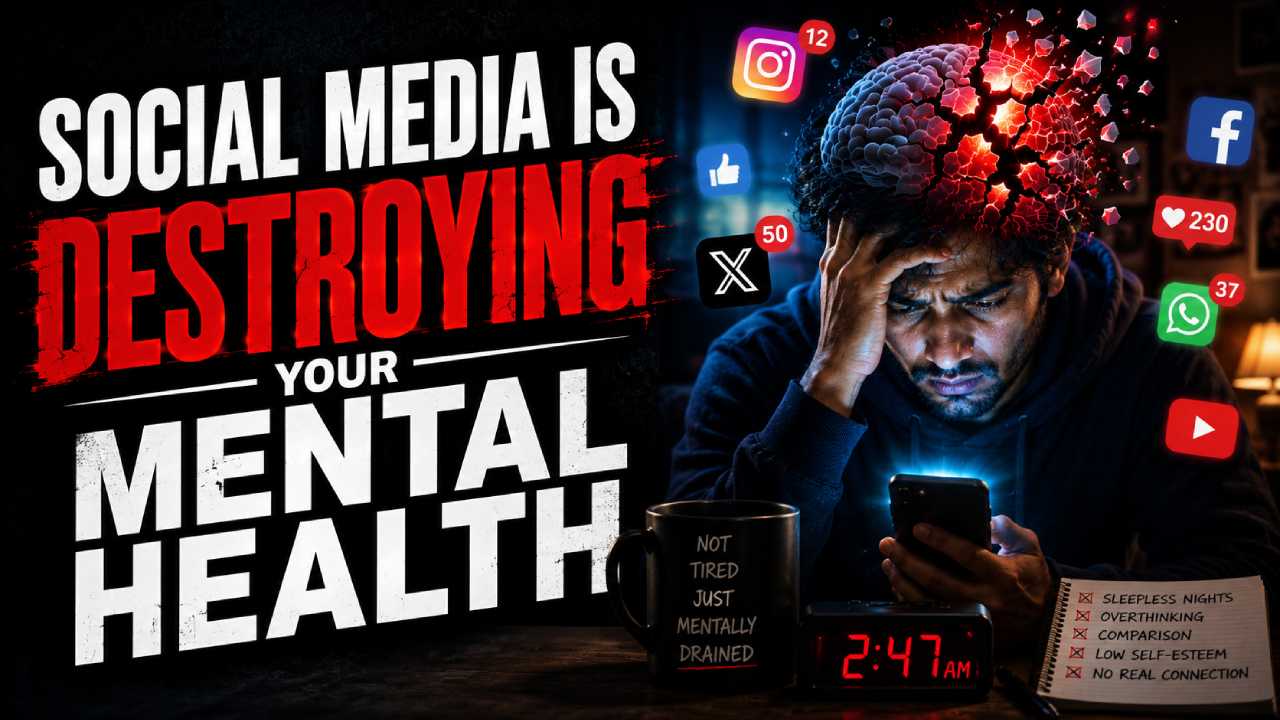
In today's world, social media plays a crucial role in our daily existence. From staying connected with friends and family to consuming news, entertainment, and trends, platforms like Instagram, Facebook, and X (formerly Twitter) dominate daily routines. However, while social media offers convenience and connection, there is growing concern about the impact of social media on mental health, especially among young people.
Dr. Mukesh Jha, Consultant Psychiatrist at Kailash Hospital, Noida, observes a young patient scrolling through her phone with a distant, anxious expression. "She told me she spends over six hours daily on social media. She compares her life to the curated highlights of influencers, feels perpetually inadequate, and can't remember the last time she felt genuinely happy. This is not an isolated story. The impact of social media on mental health is one of the most pressing, yet under-discussed, crises of our generation."
This comprehensive guide, with expert insights from Dr. Mukesh Jha, explores the profound impact of social media, the mechanisms behind depression due to social media, and provides a practical roadmap for reclaiming your mental well-being without necessarily going offline forever.
Table of Content
The numbers are staggering and sobering. According to recent data:
- On average, people are spending nearly 2.5 hours each day on social media.
- Teens and young adults spend even more, often exceeding 4-5 hours per day
- Rates of anxiety and depression have risen 70% among young people over the past decade, correlating directly with the rise of smartphone and social media use
- 1 in 5 social media users report that using these platforms makes them feel worse about their own lives
"These numbers aren’t just figures; they reflect genuine human suffering," explains Dr. Mukesh Jha. "At Kailash Hospital, we see the consequences daily—young adults unable to focus, feeling isolated despite being constantly 'connected,' and struggling with low self-worth. The bad effects of social media are often invisible until they become severe."
Understanding why social media is so impactful requires a look at the brain's reward system.
1. The Dopamine Loop
Every like, comment, share, or notification triggers a small release of dopamine —the "feel-good" neurotransmitter. This creates a reward cycle. You post, you wait, you get a hit, you post again. This idea of intermittent reinforcement is what makes slot machines so addictive.
2. Social Comparison Theory
Humans have an innate drive to evaluate themselves by comparing with others. On social media, you are comparing your unfiltered, messy, ordinary reality to someone else's carefully curated, filtered, highlight reel. This invariably leads to feelings of inferiority and inadequacy.
3. Fear of Missing Out (FOMO)
Seeing others having fun, achieving milestones, or gathering without you creates anxiety and a sense of exclusion. FOMO drives compulsive checking and a feeling that you must stay constantly connected or you might miss something important.
4. Sleep Disruption
Screen-emitted blue light suppresses melatonin production, disrupting the body's natural circadian rhythm. Crucially, the relationship between poor sleep and mental illness is bidirectional — sleep deprivation worsens psychiatric symptoms, which in turn further impairs sleep quality, creating a reinforcing cycle that is difficult to interrupt without intervention.
Also read: How to Get Rid of Red Spot in Eye: Causes, Treatments, and Prevention
The impact of social media on mental well-being is multifaceted and can be severe.
Depression and Anxiety
Countless studies have established a clear link between heavy social media use and increased rates of depression and anxiety. A landmark study by Hunt et al. (2018), published in the Journal of Social and Clinical Psychology, found that participants who limited social media use to 30 minutes per day experienced significant reductions in depression and loneliness after just three weeks.
"The comparison game is exhausting and ultimately unwinnable," notes Dr. Mukesh Jha. "Patients with depression due to social media often describe feeling like they are watching everyone else live a better life while they are stuck. This perceived gap between their reality and the online world is a powerful driver of hopelessness."
Body Image Issues and Eating Disorders
Platforms like Instagram and TikTok are flooded with idealized, often edited, images of bodies. This relentless exposure is tied to body dissatisfaction, especially in young women, and can provoke or worsen eating disorders.
Social Isolation (The Paradox of Connection)
Ironically, heavy social media use is associated with increased feelings of social isolation. Replacing real-world, face-to-face interactions with online ones reduces the quality of your social connections. A "like" is not a substitute for a hug or a genuine conversation.
Reduced Attention Span and Impatience
The fast-paced, short-form content of platforms like TikTok and Instagram Reels conditions the brain for constant novelty and rapid switching. This makes it increasingly difficult to focus on longer tasks like reading a book, completing a work project, or even having a lengthy conversation.
Cyberbullying and Online Harassment
Online anonymity lowers social inhibitions and reduces accountability, creating conditions in which harassment and bullying flourish. Cyberbullying differs from its offline equivalent in one critical respect: there is no safe space — it follows the victim into their home, their bedroom, and every waking hour.
Sleep Disorders
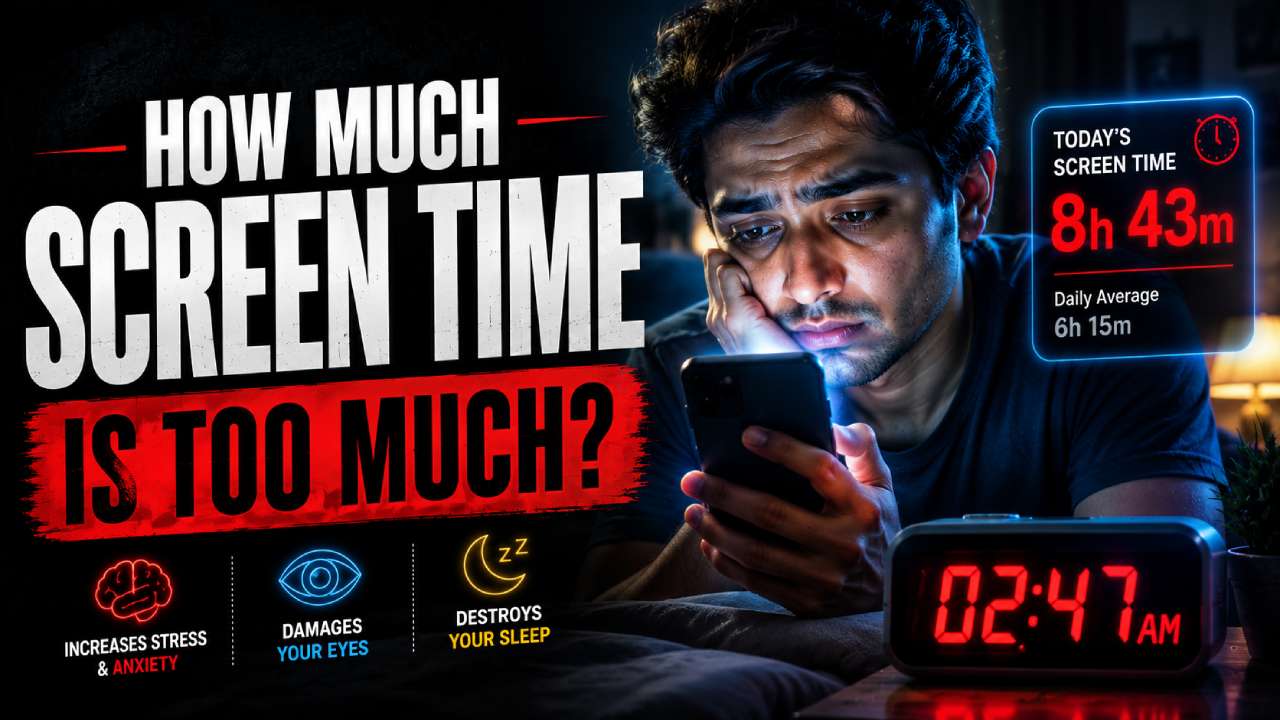
The combination of blue light exposure and cognitive arousal from late-night scrolling delays sleep onset, reduces total sleep duration, and diminishes sleep quality. Chronic sleep deprivation of even one to two hours per night accumulates into a significant physiological deficit over time.
Young people are uniquely vulnerable. Their brains are still in the process of developing, especially the prefrontal cortex, which plays a key role in impulse control and decision-making. They are also navigating the critical developmental tasks of identity formation and social belonging.
Social media affecting youth manifests in several ways:
- Academic decline: Reduced focus and time spent on studies
- Social skills deficits: Difficulty reading non-verbal cues and handling real-time conflict
- Increased risk-taking: Participating in dangerous online challenges
- Identity confusion: Curating a false online persona can lead to a fractured sense of self
- Emotional dysregulation: The constant highs and lows of online validation make it hard to maintain emotional stability
"I see teenagers who are terrified of being offline," shares Dr. Jha. "They feel that their entire social life and self-worth depend on maintaining an online presence. This dependence is a form of addiction and is a primary driver of depression due to social media in this age group."
You do not need to delete all your accounts to see improvement. The goal is mindful, intentional use. Here is a step-by-step plan recommended by Dr. Mukesh Jha.
1. The Digital Declutter
- Set time limits: Use your phone's built-in screen time tools to limit social media to 30-45 minutes per day.
- Remove apps from your home screen: Create friction. Make it slightly harder to access them.
- Schedule social media time: Check your accounts at set times (e.g., 12:30 PM and 6:30 PM), not constantly throughout the day.
2. Curate Your Feed Aggressively
- Unfollow accounts that make you feel bad about your body, life, or achievements.
- Follow accounts that educate, inspire, or genuinely entertain you without triggering comparison.
- Mute or block negative or triggering content.
3. Replace, Don't Just Remove
You cannot simply remove a habit; you must replace it with a healthier one. When you get that itch to scroll, make sure you have a different option on hand:
- Read a few pages of a book
- Listen to a podcast or music
- Call or text a friend directly
- Go for a short walk
- Do a few minutes of stretching
4. Create No-Phone Zones and Times
- No phones at the dinner table
- No phones in the bedroom (use an old-fashioned alarm clock)
- No phones for the first 30 minutes after waking and the last 30 minutes before sleep
5. Prioritize Real-World Connection
The antidote to the loneliness of online life is the richness of real-world connection. Actively schedule in-person time with friends and family.
Also read: A Complete Guide on How to Recover from Depression and Reclaim Your Life
If you or someone you know is experiencing any of the following, it is time to consult a psychiatrist in Noida:
- Persistent sadness, hopelessness, or irritability that lasts more than two weeks
- Withdrawal from friends, family, and activities once enjoyed
- Significant changes in sleep or appetite
- Difficulty concentrating or making decisions
- Thoughts of self-harm or suicide
"There is no shame in needing help," emphasizes Dr. Mukesh Jha. "The impact of social media on mental health is powerful, but it is not insurmountable. At Kailash Hospital, Noida — NABH & NABL -accredited and with over 40 years of serving the Delhi-NCR region — we offer comprehensive mental health services — from digital habit counselling to structured therapy for burnout and depression. You don't have to navigate this alone."
The bad effects of social media are real, measurable, and growing. But so is our understanding of how to combat them. The power to change your relationship with your phone lies in your hands.
As Dr. Mukesh Jha concludes: "Your mental health is your greatest asset. Do not trade it for the fleeting validation of a 'like.' Start small — leave your phone in another room for an hour. Notice how you feel. That discomfort is your brain readjusting. That peace is your brain healing. And if you find you cannot do it alone, we are here."
Take the first step today. Schedule a confidential consultation with the psychiatry department at Kailash Hospital — and begin reclaiming your attention, your relationships, and your life.







 +91-9193939393
 international.marketing@kailashhealthcare.com