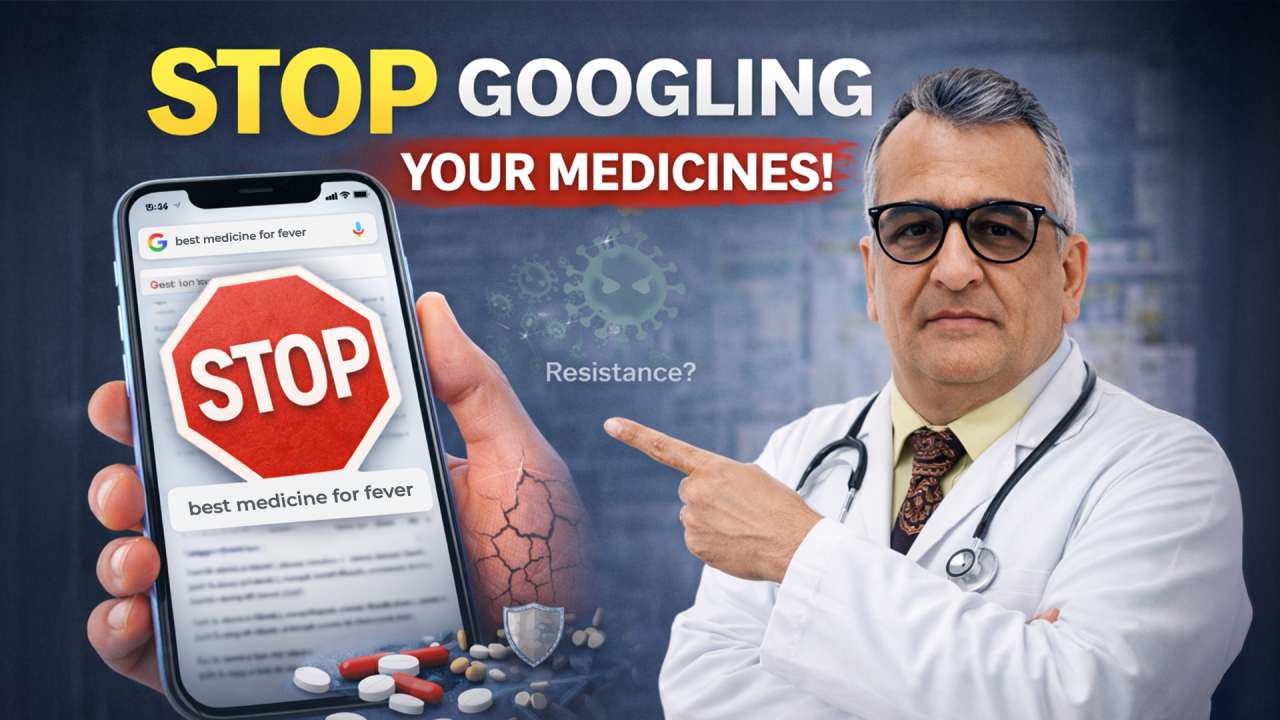
How Google Searches and Self-Medication Are Creating a Drug Resistance Crisis in India
Verified By
Dr. Sanjay Mahajan
,
MBBS, DNB (Med), MNAMS, FACP(USA), FRCP(Glasg), FICN, FICC., Sr. Consultant Physician & Intensivist, Kailash Hospital
| Published: 11-Feb-2026
In today's fast-moving world, convenience tends to steer our decisions. From ordering groceries to booking cabs, everything is just a tap away. This digital ease has, perhaps inadvertently, seeped into how we approach our health. Feeling unwell? A quick Google search for symptoms, a self-diagnosis, and a trip to the local chemist for an over-the-counter remedy often seems like the quickest solution. While seemingly harmless, this growing trend of self-medication, particularly when guided by unverified online information, is quietly fueling a dangerous public health crisis in India: Antimicrobial Resistance (AMR).
The recent news highlighting the alarming rise in drug resistance due to self-medication, serves as a crucial wake-up call. It's time we understood that while the internet offers a wealth of information, it can never replace the expertise of a qualified medical professional. Your health is too precious to be left to algorithms and unverified forum posts.
Table of Content
It’s easy to understand the temptation to bypass a doctor's visit. Long waiting times, consultation fees, and the sheer convenience of finding "instant answers" online are powerful motivators. A persistent cough, a mild fever, or a bout of indigestion often leads us to type symptoms into a search engine, hoping for a quick fix.
Dr. Sanjay Mahajan, a highly respected Sr. Consultant Physician & Intensivist at Kailash Hospital, notes, "Many patients walk into our clinic having already self-diagnosed and even started a course of medication based on what they read online. They often believe their symptoms are too minor to warrant a doctor's visit, or they simply don't have the time." This reliance on easily accessible, albeit often misleading, information creates a dangerous illusion of medical competence.
For many, finding a trusted general physician or internal medicine specialist for minor ailments can feel like an extra hassle. But this short-term convenience comes with significant long-term costs.
Also read: What is Paracetamol, and why is it commonly given to Children
The problem with self-medication extends far beyond just choosing the wrong pill. It encompasses a spectrum of risks that can have severe, even life-threatening, consequences.
1. Misdiagnosis and Delayed Treatment
One of the most immediate dangers is misdiagnosing your condition. What seems like a common cold could be a more serious respiratory infection, or persistent stomach ache could be a symptom of a critical gastrointestinal issue. Relying on generic online descriptions can lead you to treat symptoms incorrectly, allowing the underlying, more severe illness to progress unchecked.
Dr. Mahajan, emphasizes, "A doctor considers your complete medical history, conducts a thorough examination, and orders specific tests if needed. This holistic approach is crucial for accurate diagnosis. Self-diagnosis often leads to missed opportunities for early intervention in serious conditions like dengue, typhoid, or even early-stage cancers." Delaying proper treatment can turn a manageable condition into a medical emergency.
2. Adverse Drug Reactions (ADRs) and Side Effects
Medications, even over-the-counter ones, are potent chemical compounds. Their effects vary significantly based on an individual's age, weight, existing health conditions, and interaction with other medications. Self-medicating without professional guidance increases the risk of:
- Incorrect Dosage: Taking too much or too little can be ineffective or harmful.
- Drug Interactions: Combining medications without knowing their interactions can lead to severe adverse reactions.
- Allergic Reactions: Unknowingly consuming a drug to which you are allergic can result in life-threatening anaphylaxis.
- Masking Symptoms: Certain medications can mask critical symptoms, making it harder for a doctor to diagnose the true problem later.
3. The Silent Threat: Antimicrobial Resistance (AMR)
This is arguably the most insidious and widespread danger. Antimicrobial Resistance (AMR) happens when bacteria, viruses, fungi, and parasites adapt over time and become resistant to medications. This makes treating infections more challenging and raises the chances of disease spreading, leading to serious illness and even death.
The primary driver of AMR is the misuse and overuse of antimicrobials, particularly antibiotics. When you self-medicate with antibiotics for viral infections (which antibiotics don't treat), or stop taking them prematurely once you feel better, you create an environment where resistant bacteria can thrive.
Dr. Mahajan, explains, "Patients often take antibiotics for a viral flu, which is completely ineffective. Or, they'll stop taking the prescribed course after 2-3 days because their symptoms have improved. This doesn't kill all the bacteria, especially the stronger ones. The surviving bacteria learn to resist the antibiotic, multiply, and spread, creating superbugs."
India is at the forefront of the global AMR crisis. Factors like high population density, poor sanitation, unregulated sale of antibiotics without prescriptions, and widespread self-medication create a fertile ground for resistance to flourish. According to the World Health Organization (WHO), antimicrobial resistance (AMR) ranks among the top 10 global public health threats that humanity is currently facing.
In India, common infections like urinary tract infections (UTIs), tuberculosis (TB), pneumonia, and even common skin infections are becoming increasingly difficult to treat because the bacteria causing them have developed resistance to standard antibiotics. This means:
- Longer Illnesses: Infections last longer, leading to more discomfort and lost productivity.
- Higher Hospital Costs: Patients may require more expensive, second-line drugs or prolonged hospital stays.
- Increased Mortality: Simple infections, once easily treatable, can become fatal when no effective antibiotics are available.
- Impact on Complex Procedures: Surgeries, chemotherapy, and organ transplants become riskier due to the inability to prevent or treat post-operative infections.
The recent news isn't just a local concern; it mirrors a national problem that demands immediate attention. Doctors, including many a General Physician, are witnessing firsthand the challenges of treating infections that were once easily managed.
Also read: Understanding the Essentials of Taking Medicine: Q&A with Dr. Gopal Jee Sharma
It's crucial to understand that while minor aches and pains might sometimes resolve on their own, consistently dismissing symptoms or relying on self-medication is a perilous gamble.
Dr. Sanjay Mahajan advises, "Any symptom that is persistent, worsening, severe, or unusual should prompt a visit to a doctor. Don't wait until you're gravely ill. Early intervention is key to effective treatment and preventing complications."
Here's when you should definitely consult a doctor:
- Persistent Fever: A fever that lasts more than 2-3 days, or is very high.
- Severe Pain: Intense or worsening pain in any part of the body.
- Unexplained Weight Loss/Gain: Significant changes without dietary or lifestyle reasons.
- Difficulty Breathing: Shortness of breath, persistent cough.
- Changes in Bowel Habits: Persistent diarrhea, constipation, or blood in stool.
- Unusual Lumps or Swellings: Any new or growing lumps.
- Symptoms that recur frequently.
- Any symptom that causes you significant concern or impacts your daily life.
Remember, even experienced doctors rely on a combination of their knowledge, clinical examination, and diagnostic tests. They don't just "Google" symptoms. Their training enables them to differentiate between conditions that present with similar symptoms, a nuance that online searches cannot provide.
Taking charge of your health doesn't mean becoming your own doctor; it means being informed and making responsible choices.
- Prioritize Professional Medical Advice: For any new, persistent, or concerning symptoms, consult a qualified doctor. Don't let convenience override your health. Find a trusted general physician near you for your family.
- Never Self-Medicate with Antibiotics: Antibiotics are prescription-only drugs for a reason. They should only be taken when prescribed by a doctor, for the correct duration, and at the right dosage.
- Complete the Full Course of Antibiotics: Even if you feel better, finish the entire course as prescribed. Stopping early is a major contributor to AMR.
- Do Not Share or Use Leftover Medications: Antibiotics are specific to certain infections and individuals. What helped someone else might harm you.
- Practice Good Hygiene: Frequent handwashing, safe food preparation, and vaccinations are vital in preventing infections in the first place, thus reducing the need for antibiotics.
- Educate Yourself, Responsibly: Use the internet to understand your condition after a diagnosis, not for self-diagnosis. Ask your doctor questions and seek clarity.
- Maintain a Health Record: Keep a record of your medical history, allergies, and current medications. This helps your doctor make informed decisions.
- Be Transparent with Your Doctor: Always inform your doctor about any medications, supplements, or home remedies you are currently taking.
Also read: Caring for Premature Babies at Home: Tips for New Parents
The allure of quick fixes offered by a simple Google search is strong, but the repercussions of self-medication, particularly the escalating crisis of antimicrobial resistance, are far too grave to ignore. As responsible citizens, it is our collective duty to prioritize professional medical advice, respect the power of medicines, and safeguard our health and the health of future generations. Let's remember that while information is abundant, genuine medical wisdom and care are irreplaceable. Choose health, choose an expert.







 +91-9193939393
 international.marketing@kailashhealthcare.com