Is Your Child Growing Up Too Soon? Early Puberty Explained
Verified By
Dr. Ruchira Gupta
,
MD, Consultant Pediatrician, Kailash Hospital
| Published: 18-Mar-2026
Puberty is a normal process in a child’s life that signifies the end of childhood and the beginning of adolescence. Puberty is characterized by a series of physical changes due to the effects of hormones. Puberty in some children, however, tends to begin at a premature age, a condition referred to as early puberty or precocious puberty.
Early puberty is an essential concept to understand because it may have some effects on the child. This article discusses the signs, effects, and how parents can help their child in the process.
Table of Content
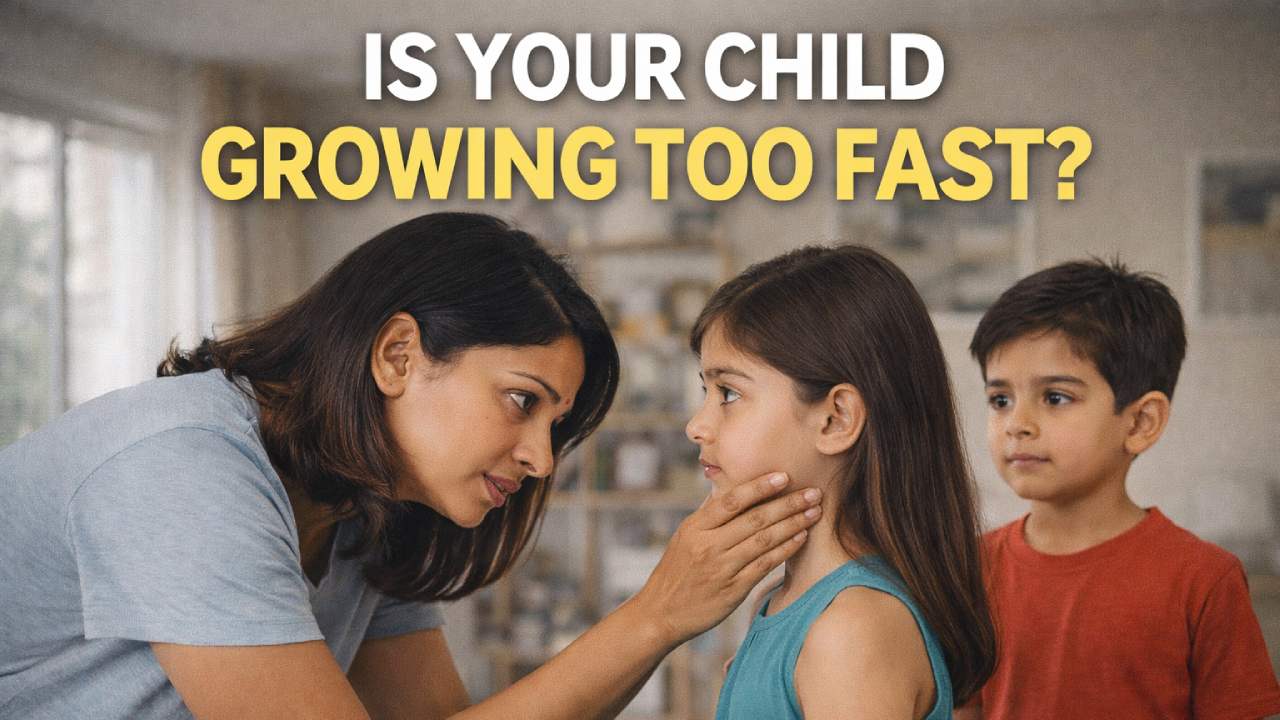
Early puberty can be defined as the appearance of puberty in a child before the normal age range. For girls, this can be before 8 years of age, and for boys, it can be before 9 years of age.
The signs of early puberty in children can be:
- Growth in height (before 8-9 years): Children can start growing taller than their friends. The growth spurt in children occurs at a faster rate than expected, and sometimes, parents realize that their child is growing at a rapid pace in terms of clothing or shoe size. However, growth spurts are normal in puberty, but if it happens too early, then it is a cause for concern.
- Development of secondary sexual characteristics:
Girls (before 8 years): Development of breast tissue may start at this age.
Boys (under 9 years): Testicles and penis size development may take place. It is also these signs that usually indicate that puberty is beginning early enough.
- Pubic or under arm hair (prior to 8-9 years): Hair in pubic or under arm develops at such a young age which is a symptom of concern. These may not be realized immediately, but parents may realize that their child has body odor.
- Skin and body changes (before 8-9 years): Puberty hormones might cause acne or excessive sweating in children at this age.
- Emotional changes (before 8-9 years): Puberty in children might cause emotional changes, and they might seem confused or frustrated about the changes in their bodies.
Seeing several signs at once before these ages should trigger a visit with a paediatrician.
Also read: Toxic Skies, Vulnerable Lungs: How Urban Air Pollution Is Impacting Our Children's Health
Early puberty may result from a combination of hormonal, genetic, environmental, and medical factors.
Hormonal Factors
Puberty is regulated by the hypothalamus-pituitary-gonadal axis. When this process begins before the age of 8 in girls and 9 in boys, it leads to early puberty, a condition known as central precocious puberty.
Genetic Factors
There is a genetic component in early puberty. It is noticed that in families where early puberty was experienced by parents and their offspring, it may occur in their children too. Observing and comparing their growth patterns with their family history helps in early detection of the condition.
Obesity
High levels of body fat result in high levels of estrogen, which cause early puberty among young girls at the age of 8 years or below. Exercising and eating healthy food can help maintain a healthy weight, hence reducing early puberty among young girls.
Environmental Factors
Chemicals found in plastics and cosmetics can interfere with hormones among young children, leading to early puberty among those aged below 8-9 years.
Medical Conditions
There are various medical conditions that can cause early puberty among young children, such as:
- Brain abnormalities: The presence of tumours and cysts, which can cause an imbalance in hormones, can cause early puberty among young children aged 8-9 years.
- Endocrine disorders: Issues related to the thyroid gland can cause early puberty among young children.
- Genetic disorders: Genetic disorders can cause an imbalance in the levels of hormones among young children aged below 8-9 years.
Early puberty impacts children physically, emotionally, and socially. Rapid bone development causes them to grow tall but may stunt them later in life due to early closure of the growth plates, besides noticeable physical developments that give them an appearance of being older. Mood changes, anxiety, low self-esteem, and exposure to peer pressure due to hormonal imbalances make life emotionally challenging for them.
If parents suspect that their child shows signs before the typical age range, they should consult their child's paediatrician. Signs before the typical age range include:
- Signs of puberty before age 8 in girls or before age 9 in boys
- Rapid or unusual growth
- Early development of secondary sexual characteristics
- Neurological signs, which include headaches or vision problems
- Early menstruation in girls before 8 years
- Other unexplained changes in hormones or physical changes
Also read: Infant Congestion: When Your Baby's Stuffy Nose Becomes an Emergency
Diagnosis includes a review of the medical and family history, physical examination for growth and characteristics, blood tests for hormones such as LH, FSH, estrogen, and testosterone, bone age X-rays, and brain scans if necessary to distinguish central from peripheral precocious puberty.
Treatment Approaches
Management aims at addressing the underlying cause, such as thyroid or brain problems, through interventions such as healthy eating, exercise, and reducing chemicals. It includes regular checks to monitor growth and hormones, as well as emotional support through talking and counselling.
Preventive Measures
Although certain risks cannot be completely avoided, they can be reduced by ensuring proper nutrition, regular exercise, minimizing contact with plastics and pesticides, monitoring growth, open conversations about body changes, and regular check-ups to identify problems early.
Early puberty, when it occurs prior to the age of 8 in girls and 9 in boys, can have a major influence on the physical, emotional, and social development of the child. It is therefore important that parents seek guidance in case they suspect that their child may have entered early puberty. A child who undergoes early puberty can develop physically and confidently in their teenage years.









 +91-9193939393
 international.marketing@kailashhealthcare.com