How Much Phone Screen Time Is Truly Healthy?
Verified By
Dr. Mukesh Jha
,
MD, Consultant, Kailash Hospital
| Published: 06-Jun-2026
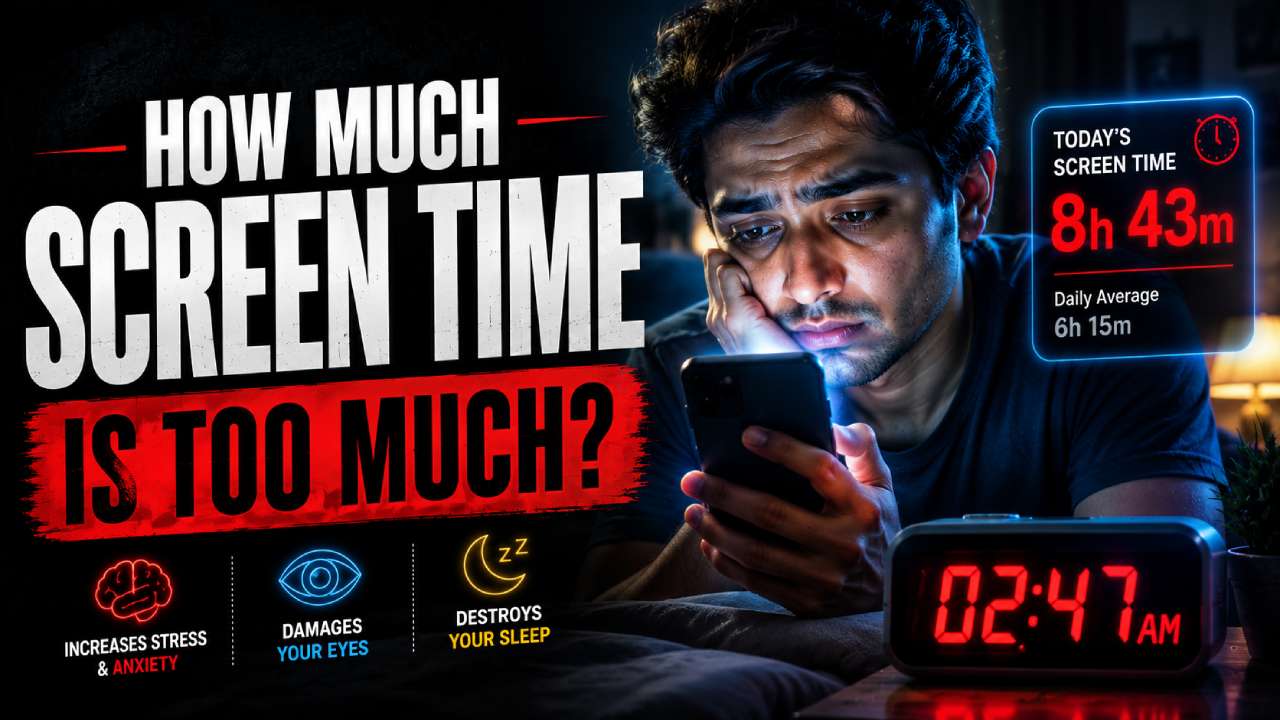
Walk into any metro train, office cafeteria, or family dinner across India and the scene is identical — heads down, screens glowing. India is now among the highest smartphone-using nations in the world, with urban adults averaging five to seven hours of daily screen time, a number that has climbed sharply since remote and hybrid work became the norm.
Most people asking about healthy screen time are really asking a different question: am I damaging myself, and how would I know? The side effects of excessive screen time are rarely dramatic enough to force attention — they accumulate quietly, across the brain and the eyes, until something breaks down significantly enough to bring a patient into a clinic.
As a psychiatrist and an ophthalmologist who together see the full consequences of this problem, our answer to "how much is too much" is the same: the number of hours matters far less than whether you are in control of those hours, and what they are doing to your health.
Table of Content
The American Academy of Paediatrics sets clear limits for children — no screen time under 18 months except video calls, one hour per day for ages two to five, and supervised limits beyond that. For adults, no universal ceiling exists. Context determines risk.
The most clinically useful distinction is between active and passive screen time.
Active screen time — professional work, video calls, learning, creating — carries a fundamentally different risk profile from passive consumption: mindless social media scrolling, algorithm-driven video feeds, reflexive checking. A reasonable benchmark for Indian adults is fewer than two hours of recreational, passive screen time daily outside of work. It is not the total hours that define the harm — it is the quality of the engagement and whether you retain voluntary control over it.
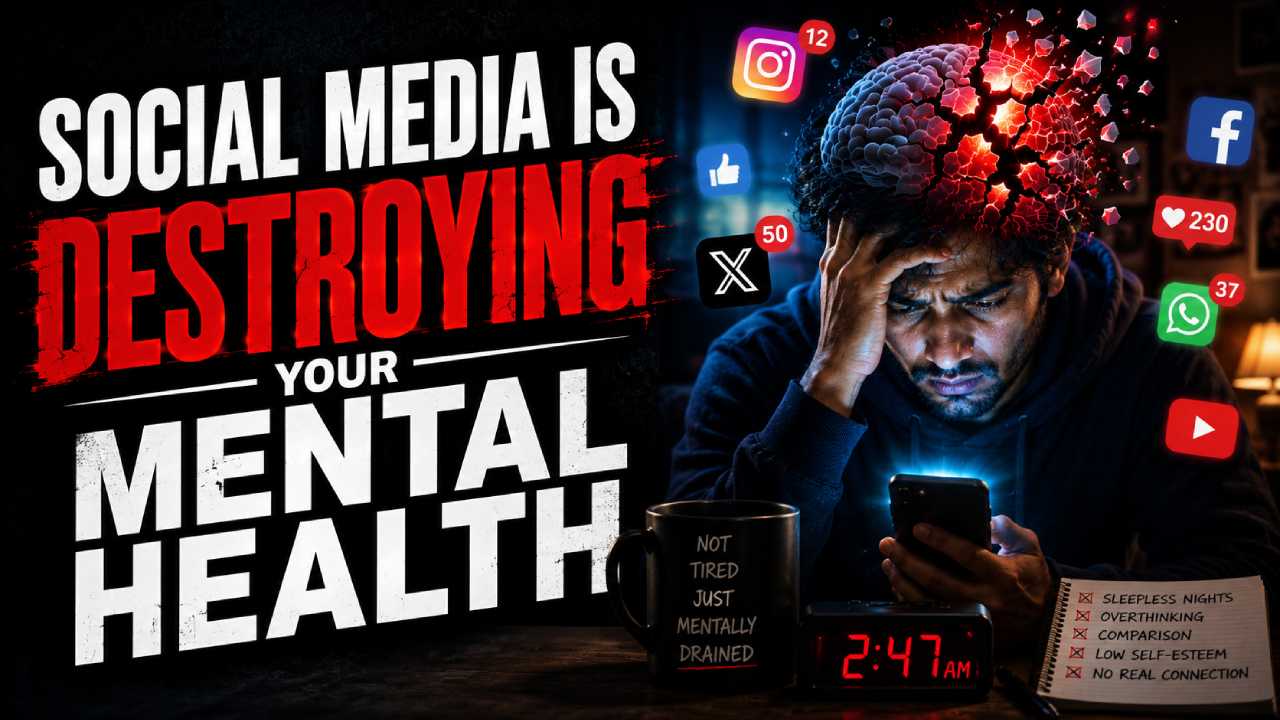
Also read: How Social Media is Reshaping Your Brain and Stealing Your Peace
"I don't look at screen time metrics or hours per day in a consultation — that data is largely irrelevant," says Dr. Mukesh Jha, Consultant Psychiatrist. "A software engineer in Bengaluru might spend ten hours on a device completely symptom-free, while someone else is clinically decompensating on four."
Dr. Jha identifies three specific markers that distinguish a heavy habit from a genuine psychiatric concern: erosion of sleep, work performance, or relationships; acute anxiety or irritability when separated from the device; and using the phone as an escape mechanism from underlying conditions like depression or anxiety disorder.
"The single most pervasive misconception I encounter," he explains, "is that patients present the phone as the cause of their problems — 'Doctor, my phone is making me anxious and depressed.' In reality, the phone is almost always a symptom, not the cause. It functions as a cognitive anesthetic. Patients rarely scroll endlessly because they love the content. They scroll to avoid the quiet space where their actual anxiety, trauma, or sense of failure lives."
When that avoidance loop is interrupted — even partially — outcomes improve measurably. A University of Pennsylvania study found that limiting social media use to 30 minutes per day produced significant reductions in depression and loneliness, not simply because of less screen time, but because the avoidance mechanism itself was broken. (Hunt et al., Journal of Social and Clinical Psychology, 2018)
Dr. Jha recalls a 28-year-old corporate professional who arrived wanting a sleeping tablet for severe insomnia and palpitations — phone in hand until 3 AM every night. A clinical interview revealed revenge bedtime procrastination: because he felt no control over his working day, he used the phone at night to reclaim autonomy, keeping his sympathetic nervous system chronically activated. (Chang et al., Proceedings of the National Academy of Sciences, 2015) No medication was prescribed. A bedroom phone ban and CBT-I protocol alone dropped his sleep latency from 90 minutes to under 20 within three weeks, with a 60% reduction in anxiety scores and complete resolution of palpitations.
From Dr. Kunal Singh's ophthalmological perspective, the primary harm is not brightness or radiation — it is what screens do to your blink reflex and your tear film.
"When we focus on a screen, we don't just blink less — we frequently perform incomplete blinks, where the upper eyelid fails to fully meet the lower," he explains. "The meibomian glands require the physical pressure of both lids meeting completely to pump oil into the tear film. Blink halfway and those glands eventually atrophy from disuse."
Research confirms blink rate drops by up to 60% during screen use — from 15–20 blinks per minute to as few as five to seven. (Tsubota & Nakamori, New England Journal of Medicine, 1993) The consequences for Indian children are particularly concerning. India is among the countries experiencing the fastest rise in myopia rates in Asia, consistent with a global trajectory projecting that nearly half the world's population will be affected by myopia by 2050, compared to 23% in 2000 — driven substantially by increased near-work and reduced outdoor time. (Holden et al., Ophthalmology, 2016)
The most common clinical error Dr. Singh observes — and one that standard health advice never addresses — is the combination of forceful blinking and vasoconstrictor eye drops.
When screen users experience blurred vision from a dry ocular surface, they instinctively squeeze their eyes tightly to clear the picture. This creates mechanical friction across an already dry cornea, worsening microscopic surface damage. To manage the resulting redness, patients reach for over-the-counter redness-relief drops.
"These drops do nothing to hydrate the eye," Dr. Singh explains. "They cause a rebound hyperemia effect — when the medication wears off, blood vessels dilate even wider, leaving the eyes redder and drier than before. The patient enters a cycle of chemical dependency while the underlying tear film crisis goes entirely untreated."
He recalls a 26-year-old UI/UX designer who presented convinced he had a neurological condition — complaining of sudden drops from sharp to hazy vision with deep headaches behind the brow. Slit lamp examination told a different story: a Tear Break-Up Time of just three seconds (normal is over ten), significant corneal surface damage, and meibomian glands secreting thick, toothpaste-like material instead of clear oil. His vision was simply his tear film breaking apart within seconds of opening his eyes. Six weeks of preservative-free lubricants, nightly lipid ointments, and warm compresses healed the corneal surface completely — Tear Break-Up Time extended to eleven seconds, visual fluctuations ceased, and the headaches disappeared.
Also read: How to Get Rid of Red Spot in Eye: Causes, Treatments, and Prevention
For your brain — Dr. Jha: Move your phone charger out of the bedroom permanently. This single environmental change eliminates the hypervigilance loop without requiring willpower — the friction is built into the environment. Add a 60-minute screen-free window before sleep. If you find that attempting to reduce phone use reliably triggers anxiety or irritability, that is a clinical signal worth discussing with a psychiatrist — the phone is not the problem, and willpower alone will not resolve it.
For your eyes — Dr. Singh: Practice complete blink training four times daily — close normally, pause two counts, squeeze gently two counts, open and relax. This takes under a minute and directly engages the meibomian glands that passive blinking fails to pump. Check the humidity in your workspace: air conditioning in Indian offices frequently drops ambient humidity below 20%, dramatically accelerating tear evaporation. A small cool-mist humidifier beside your monitor addresses this directly. Avoid redness-relief drops for screen-related eye irritation — use preservative-free lubricating drops instead, and see an ophthalmologist if symptoms persist beyond two weeks.
The long-term effects of too much screen time are not hypothetical — they are sitting in psychiatric and ophthalmology clinics across India every day, presenting as insomnia, anxiety, dry eyes, and blurred vision that patients have been managing incorrectly for months.
Healthy screen time is not defined by hours. It is defined by control, purpose, and the absence of measurable harm to your sleep, your mood, and your vision. The two questions worth asking yourself are simple: are you choosing to use your phone, or does the urge feel compulsive? And are your eyes, your sleep, or your mental health measurably worse since your screen habits intensified?
If the answer to either is yes, the solution is not willpower. It is understanding what is actually happening — and getting the right clinical guidance to address it.








 +91-9193939393
 international.marketing@kailashhealthcare.com