Complex Regional Pain Syndrome (CRPS): Symptoms, Diagnosis, and Treatment Options Explained
Verified By
Dr. Yavnika Jain
,
MD, DM, Consultant Neurologist, Kailash Hospital
| Published: 17-Jan-2026
In the world of chronic health conditions, few are as mysterious, misunderstood, and debilitating as Complex Regional Pain Syndrome (CRPS). Often referred to in medical circles as "the suicide disease" due to the sheer intensity of the agony it inflicts, CRPS has recently come into the public spotlight following the brave revelation of veteran actor Archana Puran Singh. The beloved personality, known for her infectious laughter, shared her harrowing experience with the condition after a wrist injury on a film set in 2025. Her story is a poignant reminder that behind the scenes of a successful life, an invisible battle with neurological pain can be unfolding.
Complex Regional Pain Syndrome (CRPS) is a chronic, progressive pain condition characterized by severe, constant, and debilitating pain that most commonly affects one limb—often the hand, arm, foot, or leg. This article draws on the expert insights of Dr. Yavnika Jain and the neurological care team at Kailash Hospital, Noida, to demystify this "mystery disease," highlight its symptoms, explain its diagnosis, and outline the path to modern, effective treatment.
Table of Content
At its core, Complex Regional Pain Syndrome is a disorder of the central and peripheral nervous systems. After an injury, the body's normal healing and pain-regulation processes go awry. The nervous system becomes stuck in a persistent state of "fight-or-flight," sending constant, amplified pain signals to the brain long after the original tissue damage has healed. As highlighted by actress Archana Puran Singh's public revelation about her battle with CRPS hand disease, this condition does not discriminate and can affect anyone, often following a minor fracture, sprain, or even surgery.
Also read: Decoding AVM, Brain Aneurysm and Trigeminal Neuralgia – A Neurosurgeon’s Lifesaving Guide
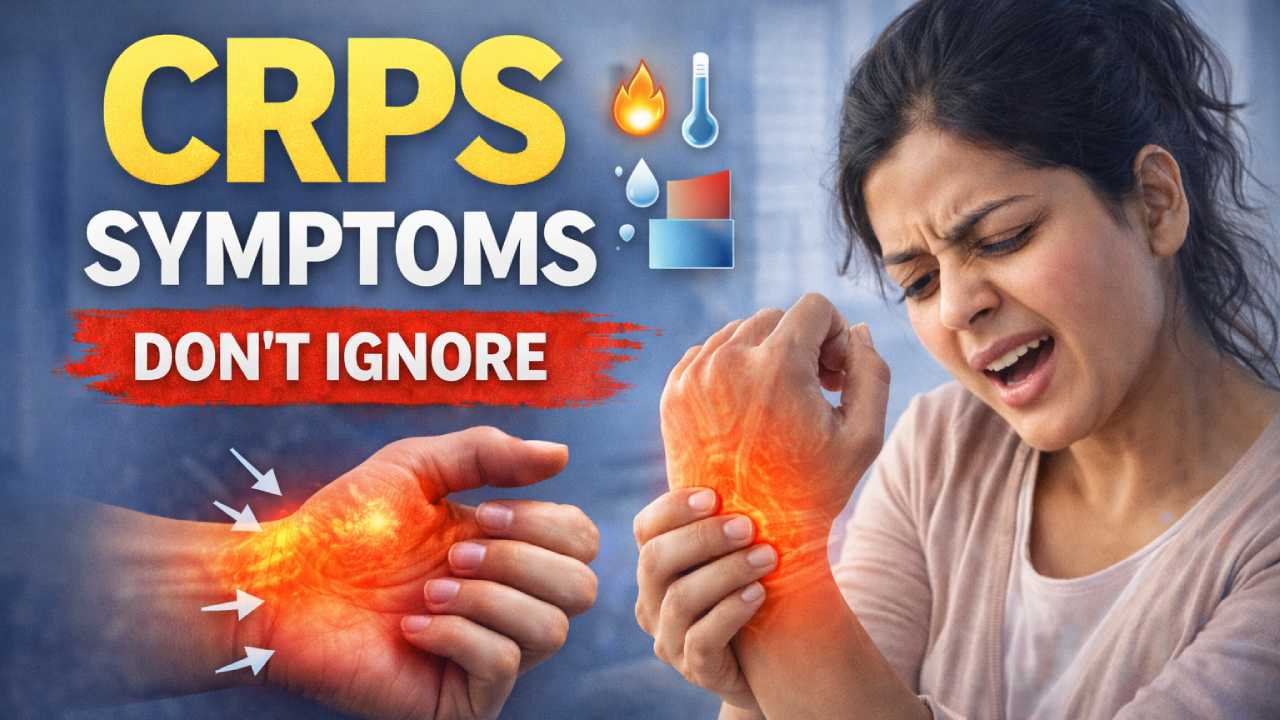
The symptoms of CRPS are its most defining and distressing feature. They typically develop in stages and can vary in intensity. The classic presentation, especially for CRPS hand disease, includes the following constellation of symptoms:
1. The Primary Symptom: Disproportionate, Severe Pain
- Continuous Burning or Throbbing Pain: Often described as a constant, searing, or "pins and needles" sensation that is vastly more severe than the original injury.
- Allodynia: Extreme sensitivity to touch. Even the light brush of clothing or a gentle breeze against the skin can cause excruciating pain.
- Hyperalgesia: An exaggerated response to a painful stimulus (e.g., a mild pinprick feels like a sharp stab).
2. Changes in Skin Temperature, Color, and Texture
- Temperature Asymmetry: The affected limb may alternate between being noticeably colder or warmer than the unaffected limb.
- Skin Color Changes: The skin may appear mottled, purple, blue, pale, or bright red.
- Skin Texture: The skin may become thin, shiny, or excessively sweaty.
3. Swelling and Stiffness
- Edema: Persistent swelling in the affected joint or limb.
- Reduced Mobility: Joint stiffness and a decreased ability to move the limb, which can lead to muscle wasting (atrophy) over time.
4. Motor and Trophic Changes
- Motor Dysfunction: Weakness, tremor, dystonia (involuntary muscle contractions), and difficulty coordinating movements.
- Trophic Changes: Abnormal hair and nail growth (excessive or absent), and changes in the speed of bone turnover, which can be seen on specialized bone scans.
"A patient with CRPS hand disease may present with a hand that is swollen, discolored to a deep purple, ice-cold to the touch, and so sensitive that they cannot wear a ring or allow a handshake," explains Dr. Yavnika Jain. "The pain is unrelenting and completely consumes their quality of life. Early recognition of this symptom pattern is critical."
There is no single test to definitively diagnose Complex Regional Pain Syndrome. A CRPS diagnosis is primarily clinical, based on a detailed patient history and a thorough neurological examination. At Kailash Hospital, Noida, the process involves a neurologist meticulously ruling out other possible causes of pain.
1. Comprehensive Medical History
The doctor will ask detailed questions about the initial injury, the nature and progression of pain, and all associated symptoms.
2. Physical & Neurological Examination
The doctor will look for the hallmark signs: temperature asymmetry, color changes, swelling, and sensory abnormalities like allodynia.
3. Diagnostic Tests (To Rule Out Other Conditions):
- X-rays: May show patchy osteoporosis (bone loss) in the affected limb in later stages.
- Bone Scans (Triple-Phase): Can detect changes in blood flow and bone metabolism that are characteristic of CRPS.
- MRI: Can reveal tissue swelling, bone marrow changes, and rule out other soft tissue or nerve problems.
- Nerve Conduction Studies & EMG: Primarily used to rule out other nerve injuries or compression syndromes (like carpal tunnel).
"The Budapest Criteria are the internationally accepted clinical diagnostic criteria we use," notes Dr. Jain. "They require the patient to report ongoing pain that is disproportionate to the inciting event, and to exhibit at least one symptom in three of the four categories (sensory, vasomotor, sudomotor/edema, motor/trophic). This structured approach helps prevent misdiagnosis, which is common with CRPS."
Also read: Stroke and its main warning signs: things you should know
Early, aggressive, and multi-modal intervention offers the best chance of improving function and reducing pain. CRPS treatment at a specialized center like Kailash Hospital, Noida, involves a coordinated team of neurologists, pain specialists, physiotherapists, and psychologists.
1. Pharmacological Management (Medications)
- Neuropathic Pain Medications: First-line treatments include drugs like Gabapentin and Pregabalin, which calm overactive nerves.
- Antidepressants: Certain tricyclic antidepressants (e.g., Amitriptyline) or SNRIs (e.g., Duloxetine) can help modulate pain pathways.
- Topical Treatments: Lidocaine patches or capsaicin cream can provide localized relief.
- Corticosteroids: Oral steroids may be used in early stages to reduce severe inflammation.
2. Interventional and Advanced Therapies
- Sympathetic Nerve Blocks: Injections of anesthetic near the spine can temporarily block the sympathetic nerves driving the pain cycle, providing diagnostic and therapeutic relief.
- Spinal Cord Stimulation (SCS): For severe, refractory cases, a device is implanted to send low-level electrical impulses to the spinal cord, masking pain signals before they reach the brain.
- Intrathecal Drug Delivery: A pump implanted in the abdomen delivers pain medication directly to the fluid around the spinal cord.
3. The Cornerstone: Physical and Occupational Therapy
- Graded Motor Imagery (GMI): A specialized therapy that uses mental exercises, mirror therapy, and graded movements to retrain the brain and reduce pain.
- Desensitization: Gradually introducing different textures and pressures to the affected limb to reduce hypersensitivity.
- Range-of-Motion and Strengthening Exercises: Vital to prevent muscle atrophy and joint contractures.
4. Psychological Support
- Cognitive Behavioral Therapy (CBT): Helps patients develop coping strategies, manage pain-related anxiety and depression, and break the fear-avoidance cycle (avoiding movement due to pain).
"The goal of CRPS treatment is not always a 'cure' in the traditional sense, but to achieve functional restoration and pain modulation," emphasizes Dr. Yavnika Jain. "We see the greatest success when we combine therapies. For instance, a sympathetic nerve block can provide a crucial 'window of relief' that allows a patient to engage fully in intensive physiotherapy, which then reprograms the nervous system for the long term. At Kailash Hospital, Noida, we have the multidisciplinary expertise to tailor this combination for each individual."
Complex Regional Pain Syndrome is a formidable adversary, but it is not unbeatable. With increased awareness—spurred by public figures sharing their stories—and advances in specialized neurology and pain medicine, patients have more options than ever before.
As Dr. Yavnika Jain, Consultant Neurologist at Kailash Hospital, Noida, concludes: "If you or a loved one is experiencing unexplained, severe pain in a limb following an injury—pain that seems to have a life of its own, accompanied by changes in color, temperature, and swelling—do not dismiss it. Time is a critical factor. Seek evaluation from a neurologist in Noida who is familiar with CRPS. Early and expert intervention is the most powerful tool we have to prevent this condition from becoming a permanent disability and to guide you back to a life of function and reduced pain."
Do not navigate this complex condition alone. For expert diagnosis and a comprehensive, personalized treatment plan for CRPS, schedule a consultation with our neurology and pain management specialists at Kailash Hospital, Noida.









 +91-9193939393
 international.marketing@kailashhealthcare.com