Gallbladder Removal? Here’s the Exact Diet After a Cholecystectomy You Must Follow for Faster Recovery
Verified By
Dr. Praveen Kumar
,
MBBS, MS, FAMS, Consultant General Surgery, Kailash Hospital
| Published: 28-Mar-2026
Gallbladder surgery can bring immense relief from painful gallstones — but what you eat afterward determines how smoothly you recover. One of the most common questions patients ask is: “Gallbladder removal – what can I eat?”
Dr. Praveen Kumar, Consultant General Surgeon at Kailash Hospital, Dehradun, points to a diagram of the digestive system during a post-op consultation. "Your gallbladder played a key role as a bile storage tank. Now that it's removed, bile trickles continuously from your liver into your intestine. This change doesn't mean you need a life of bland food, but it does demand a smart, phased approach to your diet after a cholecystectomy. The right foods to eat after gallbladder surgery help train your digestive system to adapt smoothly, preventing discomfort and ensuring optimal nutrition as you heal."
A cholecystectomy (gallbladder removal) is a common procedure, often performed laparoscopically. While the surgery addresses the pain of gallstones, it introduces a new dynamic to your digestion. Without a gallbladder to concentrate and regulate bile, your body needs time to adjust to a steady, low-level flow. This comprehensive guide, with expert insights from Dr. Praveen Kumar, provides a clear, step-by-step roadmap for your nutritional journey post-surgery, helping you navigate from the first clear liquids to a healthy, varied, and satisfying long-term diet.
Table of Content
Understanding the "Why": How Digestion Changes Post-Surgery
The gallbladder doesn't produce bile; the liver does. The gallbladder's job was to store and concentrate this bile, then release a powerful squirt of it when fatty food entered the small intestine to help with emulsification and digestion.
After surgery: Bile flows directly and constantly from the liver into the small intestine. When you eat a large, fatty meal, there may not be enough concentrated bile available at the right time to handle it efficiently. This can lead to what’s called Post-cholecystectomy Syndrome, and the symptoms might include:
- Diarrhea or loose, urgent stools (especially after fatty meals)
- Bloating and gas
- Abdominal discomfort or cramping
"The goal of the post cholecystectomy diet plan is not permanent restriction," explains Dr. Praveen Kumar. "It's a rehabilitation program for your digestive system. We start gently, allowing inflammation from surgery to subside, and then gradually reintroduce foods, teaching your gut to manage the new bile flow without the old storage tank. Most people can eventually enjoy a wide range of foods with mindful eating habits."
Also read: Stomach Pain Due to Stress and Anxiety: Understanding and Managing the Impact
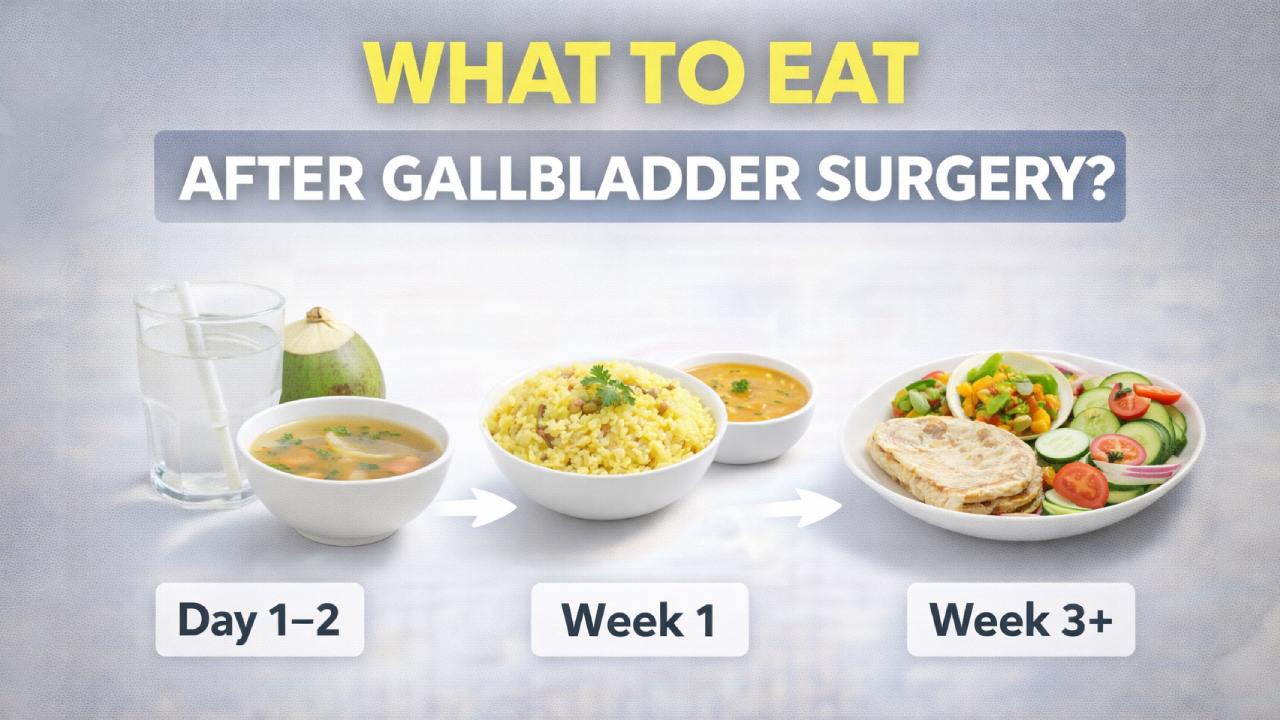
The Phased Recovery Diet: A Week-by-Week Guide
Phase 1: The First 24-48 Hours (Clear Liquids)
Immediately after surgery, your gut needs rest.
- What to Consume: Clear broth (strained vegetable or chicken soup), apple juice, coconut water, lime water (nimbu pani) without sugar, and gelatin. The goal is hydration.
- Avoid: Milk, creamy soups, and any solid food.
Phase 2: Days 2-4 (Soft, Low-Fat Foods)
As bowel sounds return and you pass gas, you can introduce very gentle, easily digestible solids.
- Key Foods: Khichdi (made with moong dal and rice, minimal ghee), steamed apples, boiled potatoes, mashed bananas, yogurt (dahi), and soups with well-cooked, pureed vegetables.
- Principle: Small, frequent meals. Chew thoroughly.
Phase 3: Week 1-2 (Expanding the Low-Fat Menu)
This is the core adaptation phase. Focus on a strict low-fat diet.
- Safe Foods to Add:
- Grains: Oatmeal (dalia), upma (made with minimal oil), whole wheat toast.
- Proteins: Skinless chicken (steamed or boiled), steamed fish (like sole or tilapia), lentils (dal), and egg whites.
- Fruits & Vegetables: All cooked vegetables (lauki, tori, carrots, spinach), and ripe fruits like papaya and watermelon.
- Dairy: Skim or low-fat milk, paneer (made from low-fat milk).
- Cooking Methods: Steaming, boiling, grilling, and baking. Use minimal oil.
Phase 4: Weeks 3-6 (The Gradual Reintroduction)
You can begin to test your tolerance. Start by introducing just one new food at a time, and keep the portion small.
- Experiment Cautiously: Add a teaspoon of ghee or oil to your khichdi. Try a small handful of nuts. Observe your body's reaction for 24 hours before trying another new fat source.
- Continue to Emphasize: High-fiber foods (like oats, vegetables, whole dals) to help bind bile acids and reduce diarrhea.
Your Long-Term "Gallbladder Removal What Can I Eat" Blueprint
After 6 weeks, most people have developed a good understanding of their tolerance. The following becomes your sustainable cholecystectomy diet plan:
Foods to Eat Liberally (The Foundation of Your Diet):
- High-Fiber Foods: These are your best friends. They help regulate bowel movements and bind excess bile.
- Examples: Oats (dalia), barley (jau), whole fruits and vegetables (with skin where possible), whole dals (moong, masoor), and legumes (chana, rajma in small, well-cooked portions initially).
- Lean Proteins:
- Examples: Skinless chicken and turkey, fish (especially fatty fish like salmon in small portions later), egg whites, and low-fat dahi.
- Healthy Fats (In Moderate, Distributed Amounts): The key is small doses throughout the day, not one large fatty meal.
- Examples: A small handful of nuts (almonds, walnuts), a teaspoon of seeds (flax, pumpkin), a drizzle of olive oil on salad, and a modest amount of avocado.
Food Restriction After Gallbladder Removal: Foods to Consume Mindfully or Limit:
- High-Fat & Fried Foods: The most common triggers.
- Limit: Deep-fried snacks (pakoras, samosas), heavy curries with excess oil, butter chicken, malai-based dishes, cream sauces, and processed meats.
- Very Rich Dairy:
- Limit: Full-fat milk, cream, cheese, and ice cream. Opt for low-fat versions.
- Certain Vegetables (For Some Individuals): Gas-producing veggies may cause bloating initially.
- Be Cautious With: Cauliflower, cabbage, broccoli, and beans. Introduce them cooked and in small amounts.
- Caffeine and Very Sweet Foods: Can act as stimulants and worsen diarrhea for some people.
"The most common mistake is returning to old eating habits too quickly," cautions Dr. Kumar. "A sudden, heavy meal of fried food is a surefire way to overwhelm your system. The mantra is 'low and slow'—low fat, and slow reintroduction. This isn't about deprivation; it's about intelligent, mindful eating that keeps you feeling your best."
Also read: How to Reduce Too Much Acid in Stomach?
Sample One-Day Post Cholecystectomy Diet Plan
- Breakfast: A bowl of oatmeal (dalia) cooked with skim milk and topped with a few slices of banana and a sprinkle of cinnamon.
- Mid-Morning: A small bowl of low-fat yogurt (dahi) or steamed apple.
- Lunch: 1-2 whole wheat rotis with a bowl of moong dal and a large serving of steamed lauki (bottle gourd) sabzi cooked with minimal oil and basic spices (turmeric, cumin).
- Evening: Herbal tea (like ginger) with a couple of digestive biscuits (marie biscuit).
- Dinner: Steamed fish (or grilled paneer) with a side of boiled vegetables and a small portion of brown rice/quinoa.
- Hydration: Don’t forget to drink enough water all day long.
Frequently Asked Questions (FAQ)
1. What is the best diet after a cholecystectomy?
A low-fat, high-fiber, balanced diet with small frequent meals is ideal during early recovery.
2. How long should I follow a post cholecystectomy diet plan?
Strict low-fat diet for 4–6 weeks, gradual transition after that.
3. Can I eat eggs after gallbladder removal?
Yes, but start with egg whites first. Avoid fried eggs initially.
4. Can I drink milk after gallbladder surgery?
Low-fat milk is preferred. Avoid full-cream milk initially.
5. Is lifelong food restriction after gallbladder removal required?
No. Most patients return to normal diet with moderate fat control.
Conclusion: A Journey to Confident Eating
Life after gallbladder surgery is not a sentence to a bland diet. It is an opportunity to develop a more mindful and healthy relationship with food. By following a phased approach, prioritizing fiber, limiting fats strategically, and listening to your body, you can enjoy a varied, delicious, and nutritious diet without fear of discomfort.
If you are struggling with your diet after gallbladder surgery or need personalized guidance to navigate this new chapter, do not hesitate to seek expert help. Schedule a follow-up consultation with our surgical and nutritional team at Kailash Hospital, Dehradun, to build your confident path forward.







 +91-9193939393
 international.marketing@kailashhealthcare.com