From Surgery to Strength: Complete Guide to ACL Recovery
Verified By
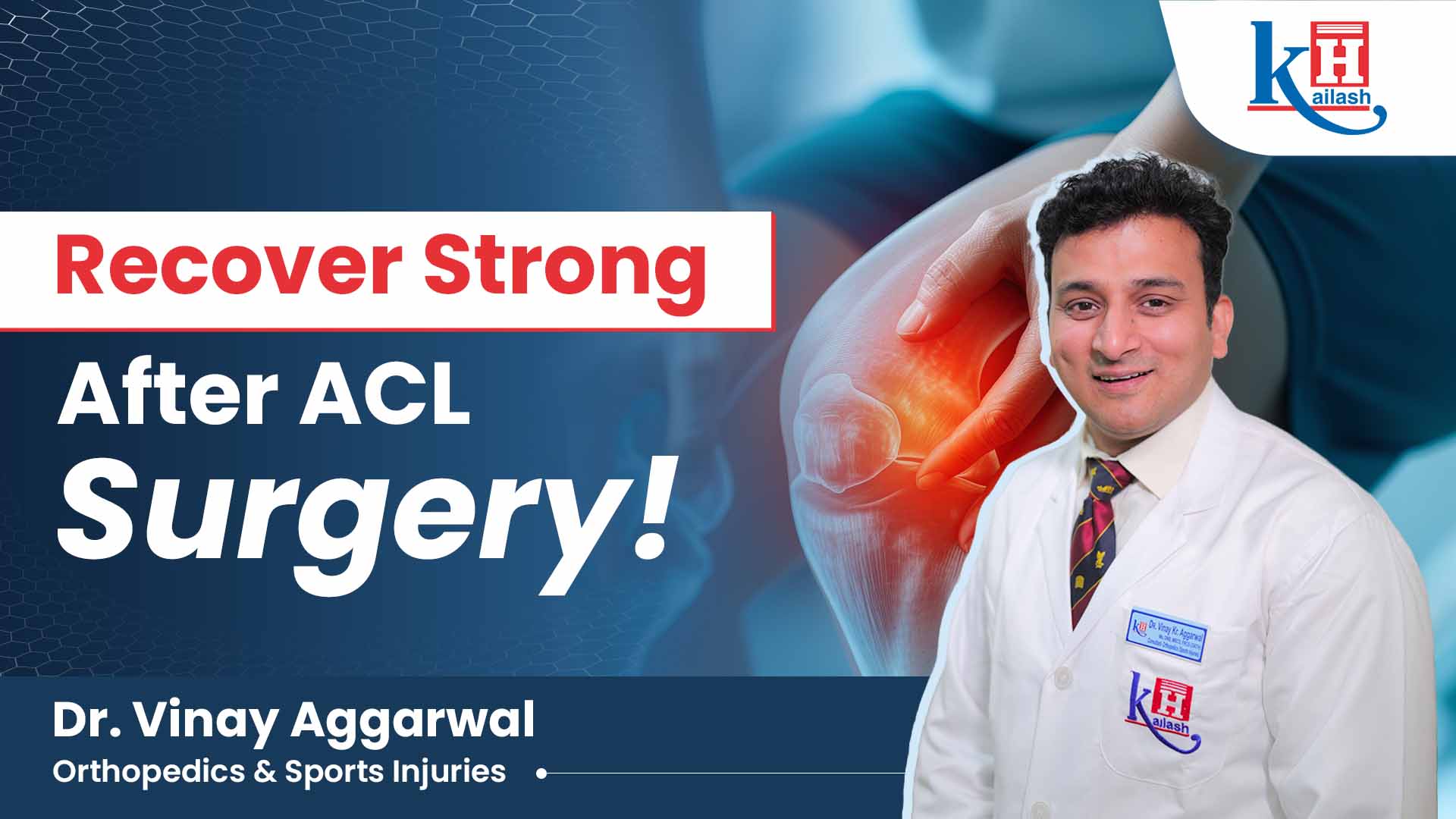
Dr. Vinay Kr. Aggarwal
,
MS(Orth), DNB (Orth), MNAMS, MRCSEd, FRCS(London), Consultant Orthopedics & Sports Injuries, Kailash Hospital
| Published: 26-Nov-2025
Anterior Cruciate Ligament (ACL) reconstruction is a common procedure performed to restore knee stability after a ligament tear—often caused by sports injuries, sudden twists, or accidents. Recovery after ACL surgery is a gradual and structured process, typically taking 6–12 months, depending on age, fitness level, adherence to rehabilitation or any additional injuries such as meniscus damage.
Returning to high-impact activities or sports generally requires 9–12 months, allowing the graft to fully heal and reducing the risk of re-injury. Rehabilitation begins immediately after surgery and is divided into phases focused on reducing swelling, restoring range of motion, and building strength.
Table of Content
Phases overlap and are both time- and criterion-based. The following is a sample timeline of recovery and post-surgical exercises recommended to aid the patient’s recovery.
Phase 1
Immediate Post-Op (Protection Phase)
0-2 Weeks
During the first two weeks after ACL surgery, the primary focus is to reduce swelling and pain, regain full knee extension, maintain patellar mobility, and activate the quadriceps muscles.
Recommended activities during this period include icing and elevating the leg, ankle pumps, quad sets (often with electrical stimulation), heel slides, stationary cycling without resistance, and straight-leg raises once there is no lag. Weight bearing is allowed as tolerated, usually with crutches and the knee brace locked initially.
It is important to keep the knee elevated above the level of the heart and to avoid active knee extension or any pivoting movements. Key milestones include achieving full knee extension (0°), performing a straight-leg raise without lag, reaching knee flexion of about 90°, and gradually weaning off crutches within 7–10 days once a normal walking pattern is restored.
Also read: Walking After Robotic Knee Replacement: How Soon Can You Get Back on Your Feet?
Phase 2
Early Recovery (Intermediate Phase)
3 to 6 Weeks
During this phase, the focus is on maintaining full knee extension, normalizing walking pattern, and building basic strength.
Rehabilitation typically includes light-resistance stationary cycling, mini-squats, step-ups, hamstring curls, balance exercises such as single-leg standing, and hip-strengthening exercises like bridges and clamshells. The knee brace is usually unlocked for walking as gait improves. It is essential to monitor the knee for swelling and avoid high-impact activities.
Key milestones during this period include achieving full range of motion, eliminating swelling, and walking normally without a brace or crutches. Many patients are able to resume driving within 2–4 weeks, particularly if the surgery was on the right leg and pain medications have been discontinued.
Phase 3
Strength Building
6 to 12 Weeks
The 6–12 week phase after ACL surgery focuses on progressively increasing load-bearing capacity while improving overall strength, endurance, and preparing the knee for impact activities.
Recommended exercises include leg presses, lunges, calf raises, elliptical or stair climber workouts starting around week eight, single-leg exercises, and advanced balance training on unstable surfaces. For patients who received an autograft, resisted hamstring strengthening may begin during this period. It is important to avoid exercises that cause pain during or after training.
Key milestones for this phase include achieving approximately 80% strength symmetry compared to the opposite leg, absence of swelling (effusion), and demonstrating good movement control during squats and lunges.
Phase 4
Advanced Functional Training
3 to 6 Months
Between 3 and 6 months after ACL surgery, rehabilitation emphasizes restoring agility, power, and dynamic control while initiating plyometrics and running. Patients typically begin a structured jogging program around the three-month mark, if medically cleared, and gradually progress to bilateral jumping and hopping drills, agility exercises such as ladder and shuttle runs, and straight-line sport-specific training.
As strength and control improve, training advances to single-leg plyometric activities. Proper technique is crucial during this stage to prevent re-injury.
Milestones for progression include achieving around 90% strength symmetry compared to the opposite leg, demonstrating good landing mechanics during hop tests, and experiencing no pain during impact exercises.
Also read: Knee Replacement Surgery: Expert Answers to Common Questions
Phase 5
Return to Sports
6 to 12+ Months
During the final phase of ACL rehabilitation, the focus shifts to full reintegration into sports and high-level activities. Training includes advanced sport-specific drills such as cutting and pivoting movements, full-contact practice sessions, and continued strength and endurance conditioning. Functional knee bracing may be used to enhance confidence during this stage.
Clearance for return to competitive play is based on objective performance tests—such as hop tests demonstrating at least 95% strength and function symmetry—as well as assessment of psychological readiness. Most athletes return to full-contact sports between 9 and 12 months post-surgery, with ongoing monitoring to ensure long-term knee health.
Follow-up visits with the orthopedic surgeon typically occur at 1 week, 2 weeks, 6 weeks, 3 months, and 6–8 months to evaluate progress and adjust rehabilitation as needed.
A successful ACL recovery depends on strong preparation, disciplined rehabilitation, and attention to overall wellness.
- Prehabilitation: Prehabilitation before surgery—focusing on leg strength and mobility—can significantly improve outcomes.
- Pain and Swelling Management: After surgery, manage pain and swelling by applying ice for 20–30 minutes every 2–3 hours, keeping the leg elevated, using compression, and taking prescribed medications as directed.
- Nutrition and Rest: Proper nutrition and adequate rest play a vital role in healing, so prioritize protein-rich foods, anti-inflammatory nutrients like omega-3s, and quality sleep.
- Physiotherapy: Stay consistent with physiotherapy, attending all sessions and performing home exercises regularly; tracking progress helps boost motivation.
- Follow Professional Guidance: Avoid rushing the process, as pushing too aggressively can lead to setbacks such as graft failure or stiffness. Always listen to your body and follow professional guidance.
- Mental Health: Mental health is equally important—recovery can be emotionally challenging, and psychological support is often linked to better confidence and quicker return to sports.
Every step in ACL recovery—from early mobility to strength training and sport-specific preparation—plays a crucial role in regaining full knee function. Working closely with an orthopaedic surgeon and physiotherapist ensures the safest and strongest return to daily life and sports.
If you or someone you know is recovering from an ACL injury and needs expert guidance, our multidisciplinary orthopedic and physiotherapy team at Kailash Hospital is here to support you.









 +91-9193939393
 international.marketing@kailashhealthcare.com